Dissimilar welding of SA335 P91 and SA218 P22 pipes fabricated through pulsed-GTAW
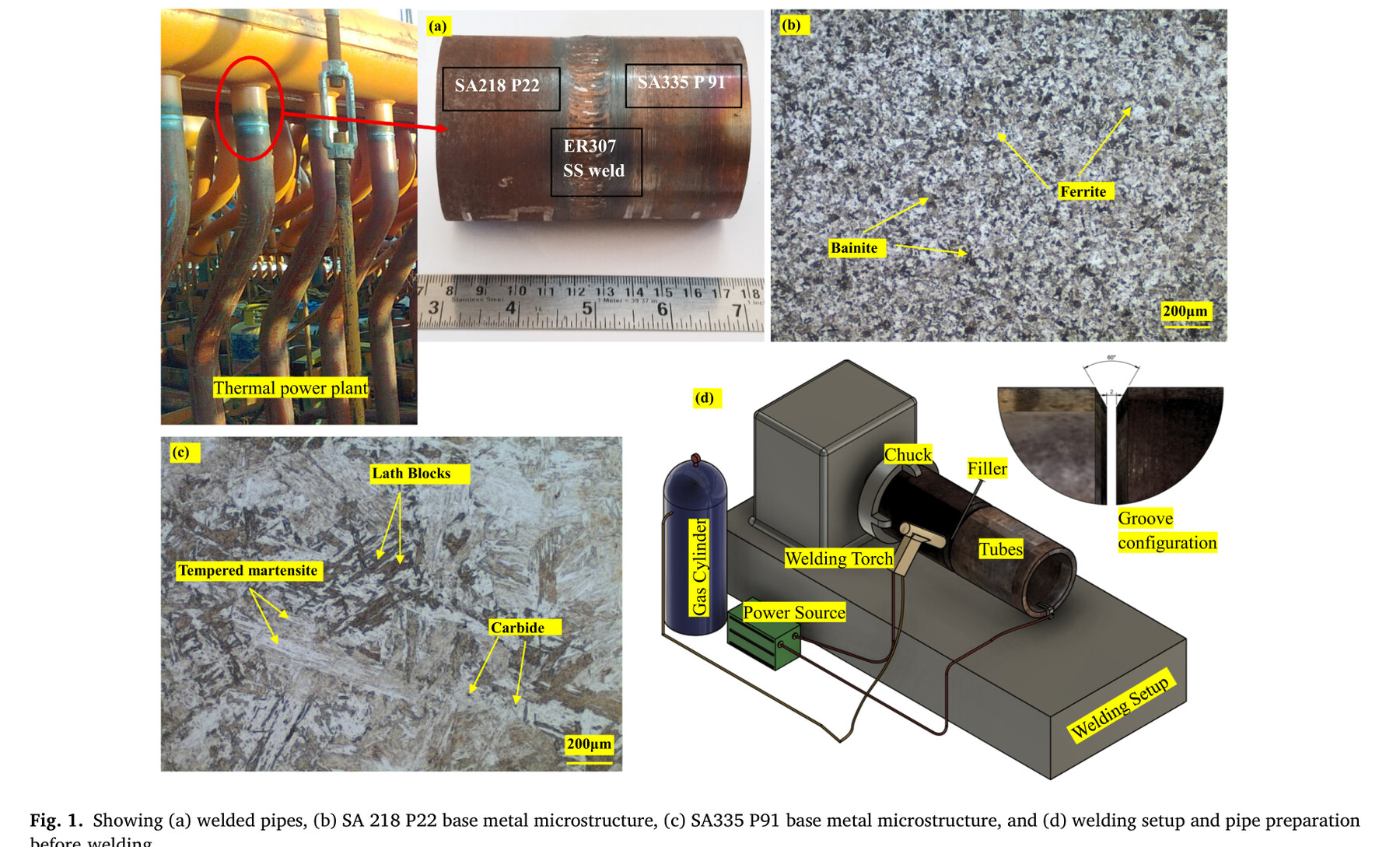
SA335 P91 and SA218 P22 are both creep-resistant alloy steels used in the superheater piping of thermal power plants, but they behave very differently under heat and stress. P91 is a ferritic-martensitic steel built for high-temperature strength; P22 is a lower-chromium steel chosen for its ductility and impact toughness at low temperatures. When a plant needs both properties in one pipe run, the two get welded together, and that joint becomes the weakest and most closely watched point in the system.
This study welded SA335 P91 to SA218 P22 tube joints using pulsed-current gas tungsten arc welding (PC-GTAW) with an ER-307 stainless steel filler, then evaluated the joint three ways: its microstructure, its mechanical integrity under tensile and impact loading, and its resistance to molten salt hot corrosion at 700°C, the kind of accelerated attack a boiler tube sees in service.
The base metals were 60 mm outer diameter, 6 mm thick tubes of SA335 P91 and SA218 P22, aged, normalized, and tempered at 750°C for 1 hour before welding. ER-307 was chosen as the filler because its fully austenitic FCC structure resists hot cracking and solidification cracking, and it accommodates the mismatch in thermal expansion between the two dissimilar base metals.
Welding parameters were tuned through bead-on trials across 120–180 A and 5–10 Hz before settling on a peak/base current of 150/75 A, 13.4 V, 10 Hz pulse frequency, and 100 mm/min travel speed, with a 2 mm root gap to avoid lack of fusion. The calculated heat input was 0.905 kJ/mm across three passes.
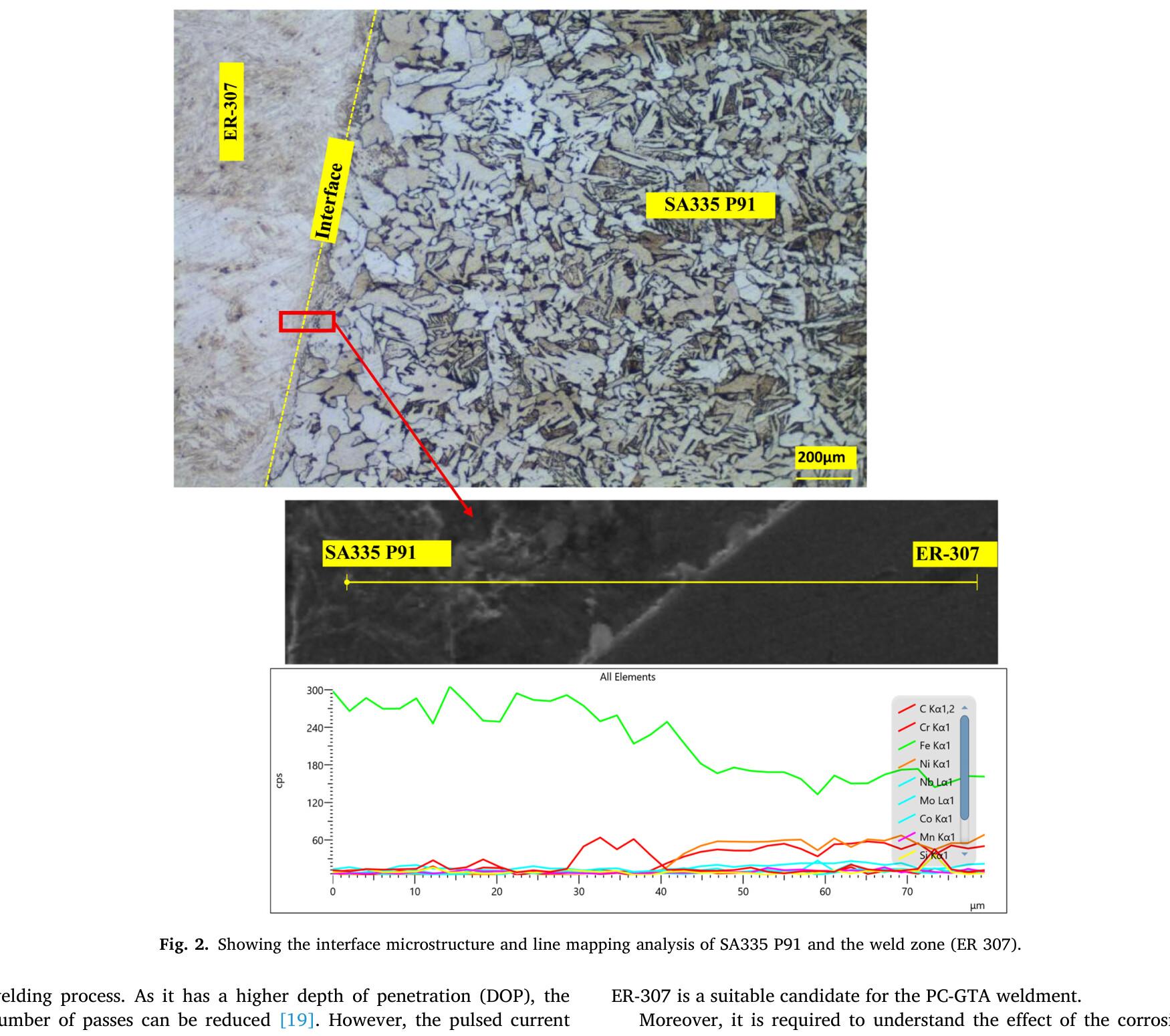
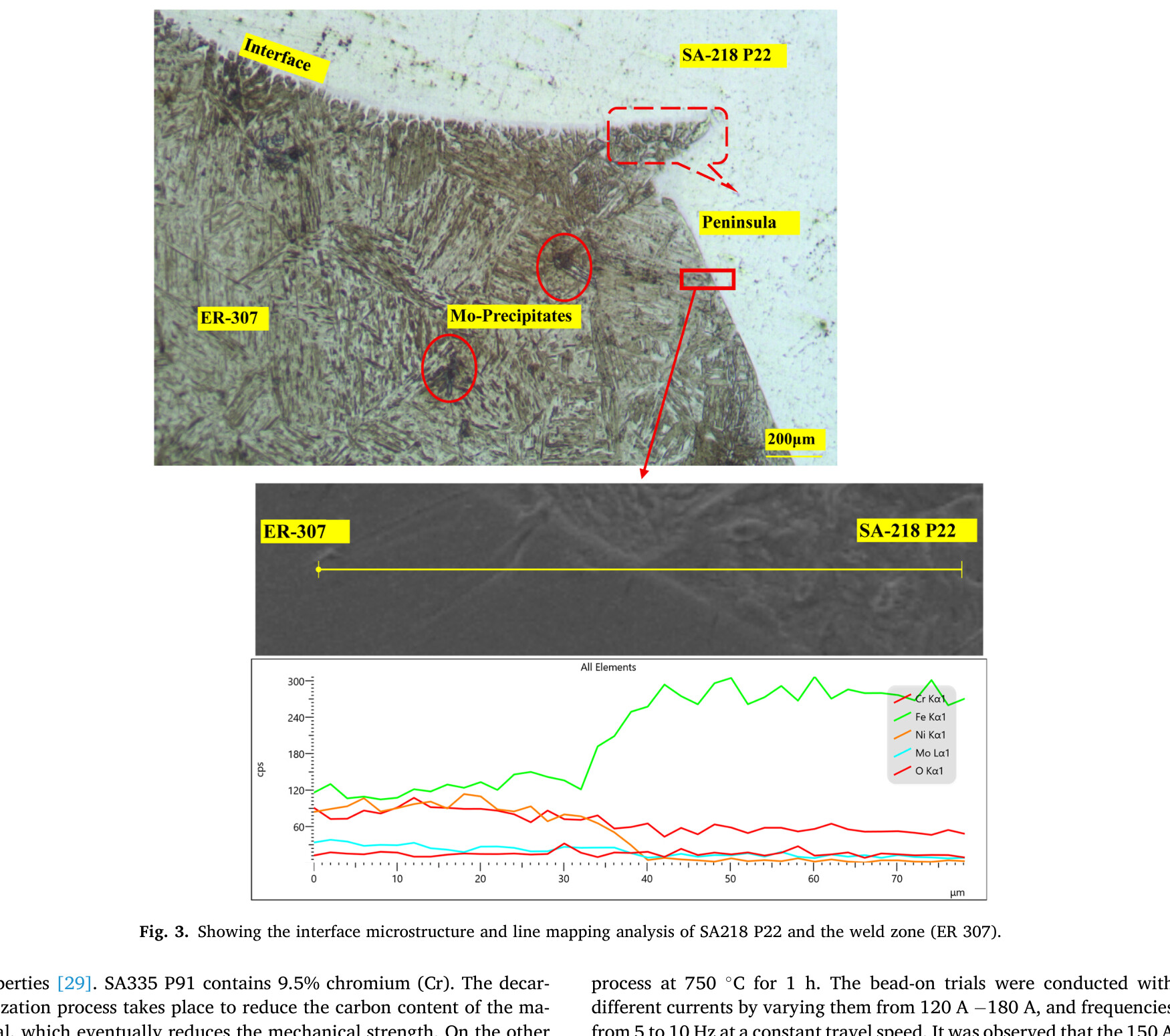
Line mapping analysis across the weld interface showed a distinct, if narrow, unmixed zone at both fusion boundaries, formed by the mismatch in liquidus temperature between the filler and each base metal. Chromium and carbon migrated from the P91 side toward the weld with a sharp concentration gradient, while iron migrated from both base metals into the weld zone at lower concentrations than either parent metal, consistent with dilution by the nickel-rich filler.
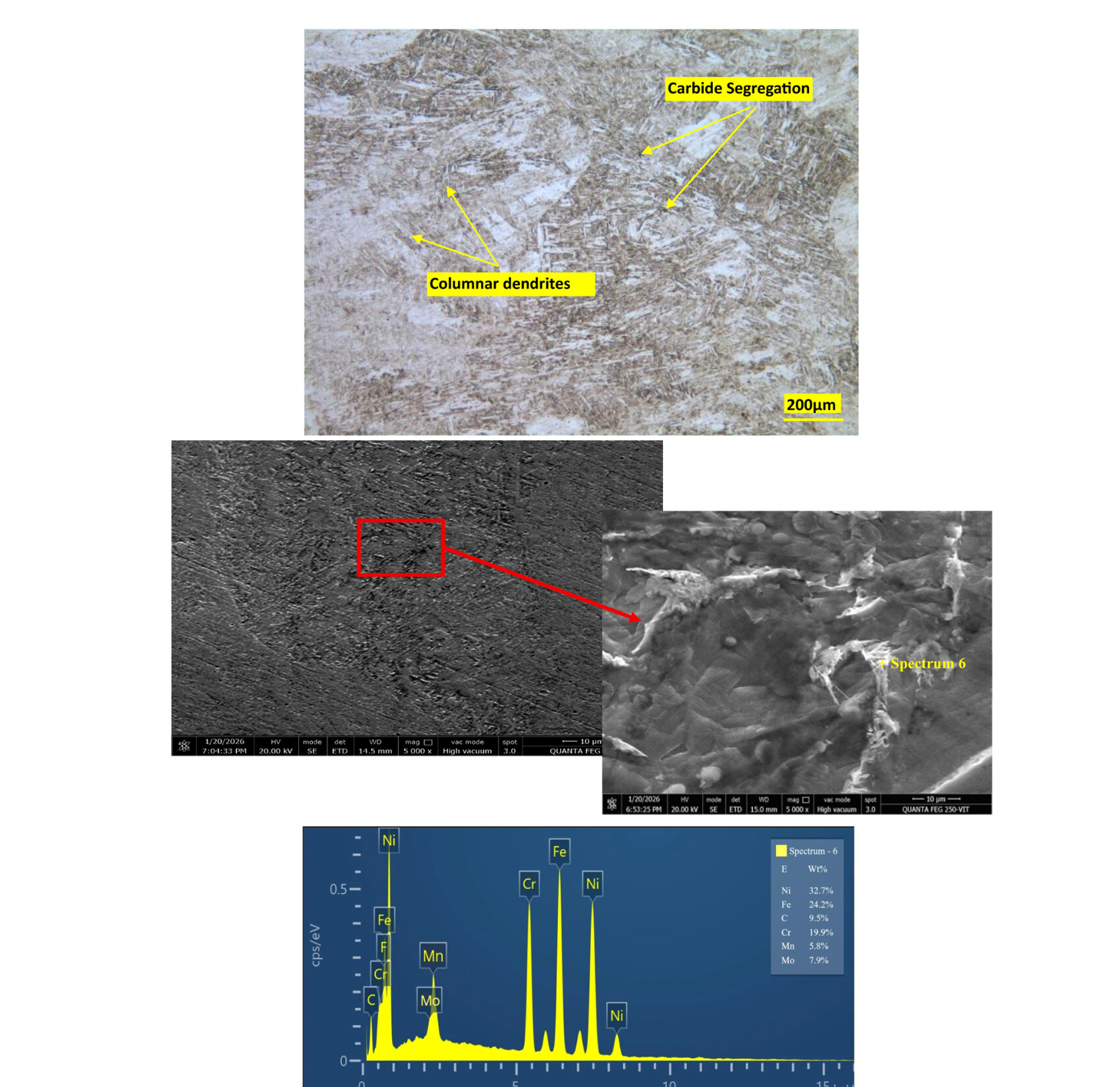
On the P91 side, the fusion boundary showed the classic tempered martensite lath structure with fine carbide precipitates. On the P22 side, ferrite and pearlite dominated, with visible bainite strings contributing to a softer, more ductile microstructure. At the weld centre, columnar dendrites and lath blocks formed during solidification, growing opposite to the direction of heat flow, a structure that helps resist both hot cracking and brittle fracture.
Point EDS in the fusion zone confirmed Mo segregation well above the nominal filler composition, alongside Ni, Cr, and C enrichment consistent with M₂₃C₆ carbide precipitation at grain boundaries already enriched with ferrite.
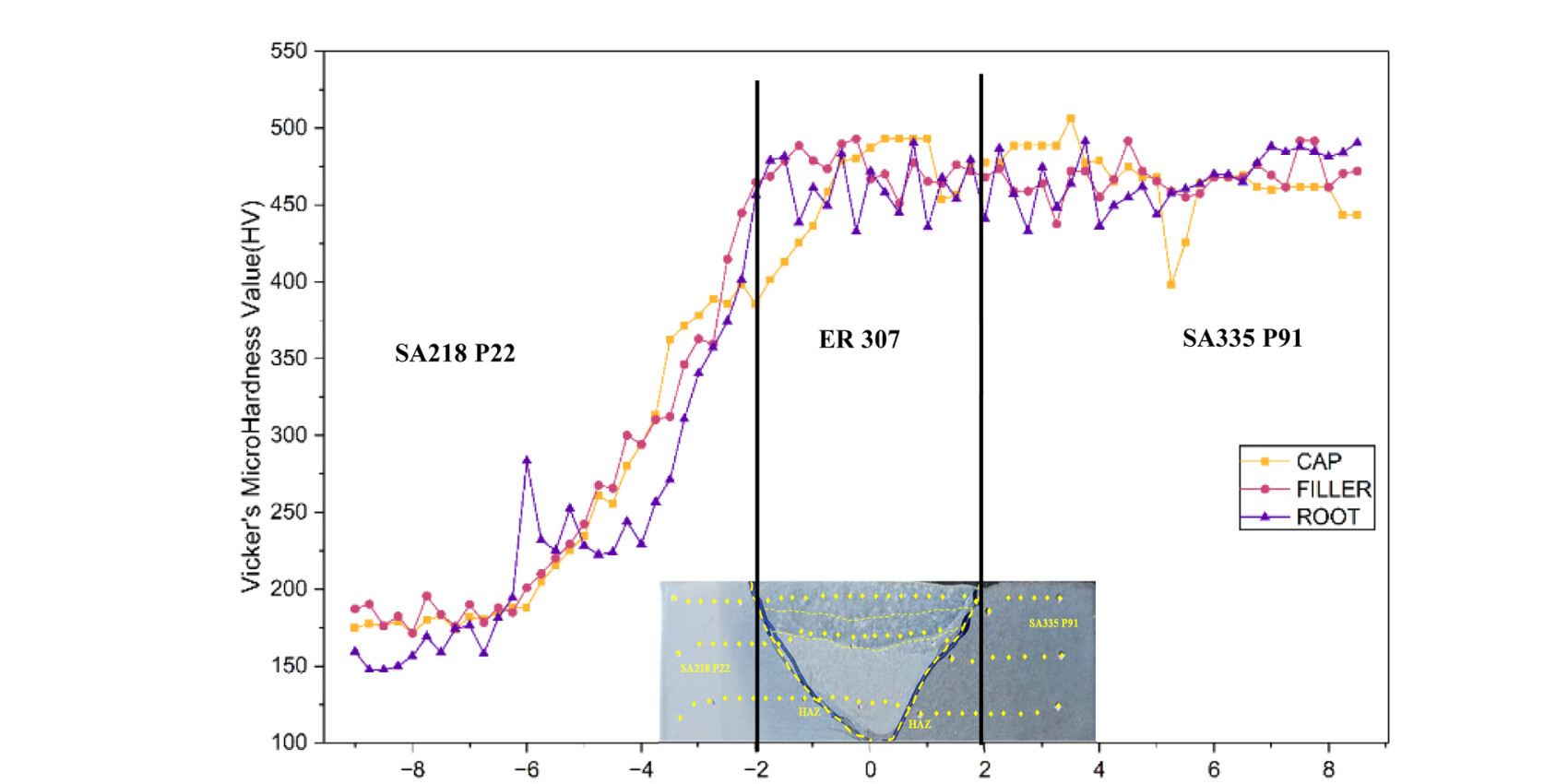
Vickers microhardness traversed from base metal through the interface into the weld: P91 measured 467 ± 5 HV, P22 measured a much softer 254 ± 4 HV, and the weld zone itself peaked slightly higher than either base metal at 473 ± 8 HV, driven by the same Ni/Cr/Mo-rich precipitates seen in the SEM-EDS data. The hardness transition was gradual on the P91 side but steep at the P22 interface, a stress-concentration risk worth flagging for anyone designing around this joint.
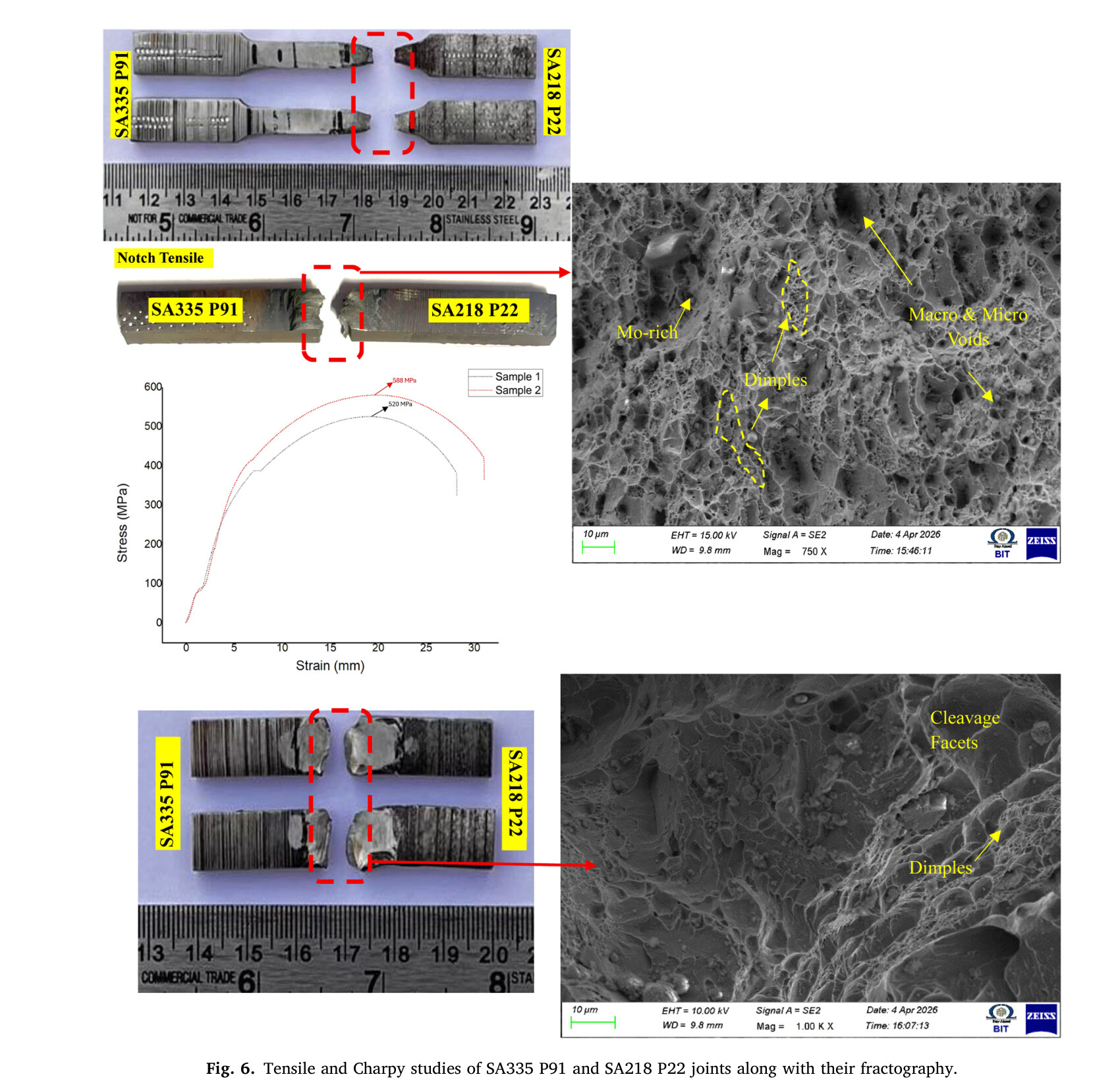
Tensile testing showed the joint failing on the P22 side, as expected given its lower base strength, at 520 ± 1 MPa UTS and 338 ± 2 MPa yield, about 9 MPa below the P22 base metal itself, meaning the weld essentially matched parent-metal strength. Notch tensile testing gave a higher UTS of 588 ± 4 MPa, fracturing in the weld with a ductile mode dominated by macro and micro voids alongside Mo-rich precipitates.
Charpy V-notch impact toughness told an encouraging story: the ER-307 weld zone reached 71 ± 2 J, higher than both P91 (59 ± 3 J) and P22 (36 ± 3 J) base metals, comfortably clearing the 47 J minimum required by EN 1557:1999. Fractography showed a quasi-cleavage mode, with M₂₃C₆ carbides acting as local stress concentrators but the Ni/Mn-stabilized austenitic matrix still absorbing enough plastic deformation to keep toughness high.
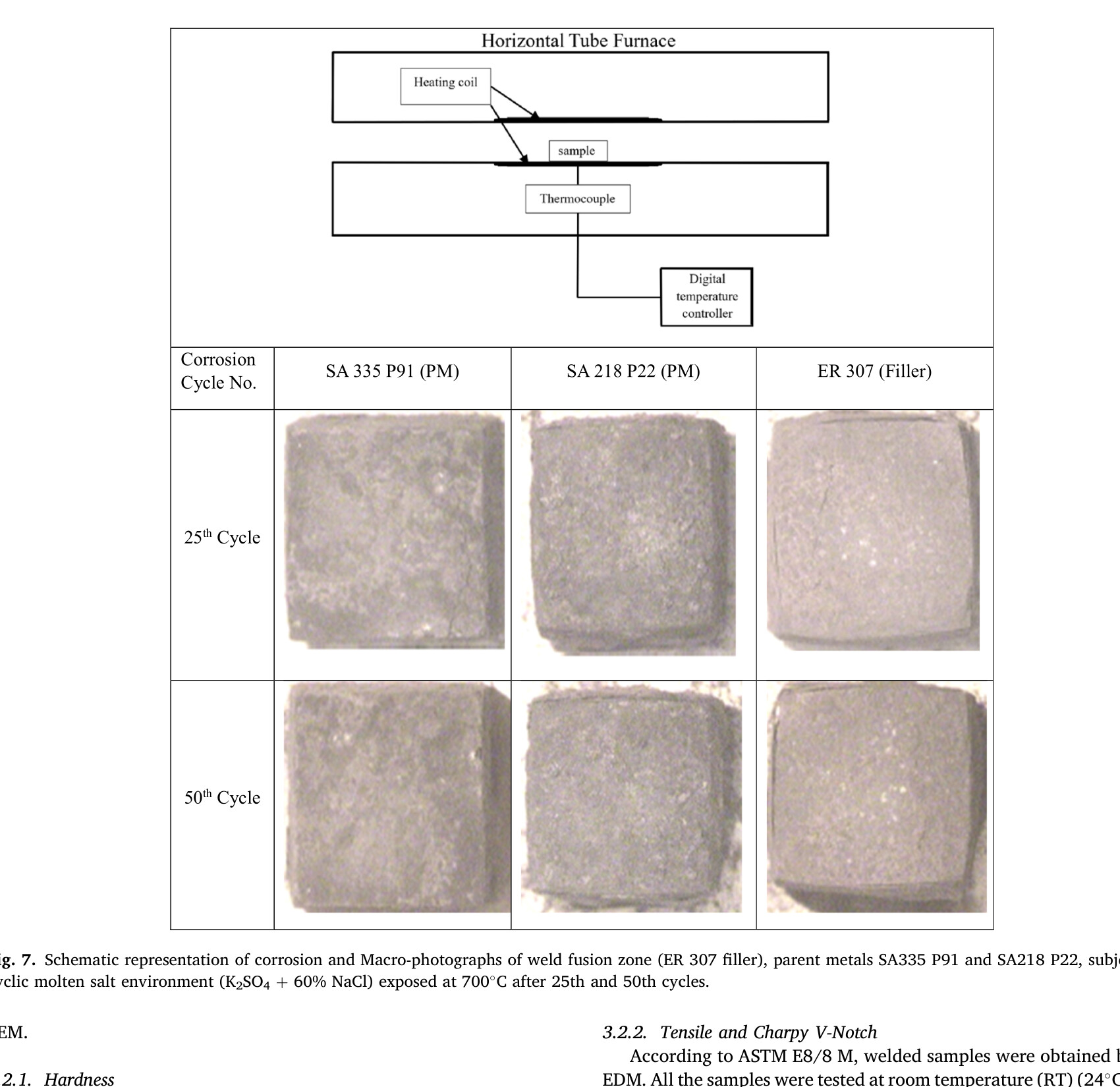
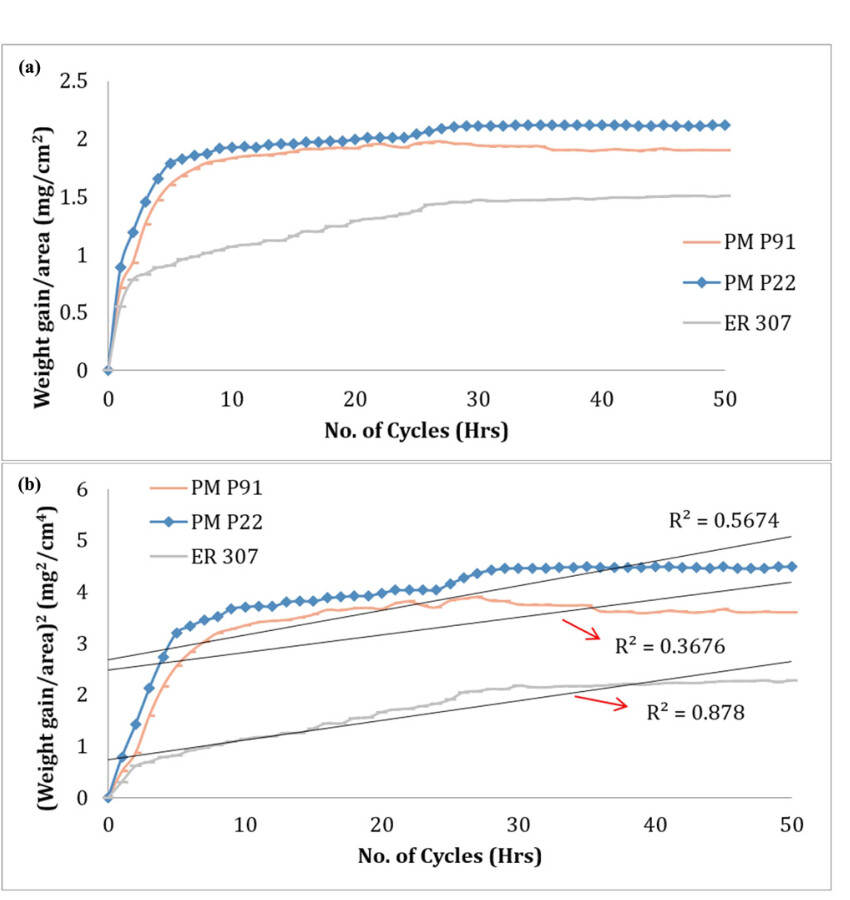
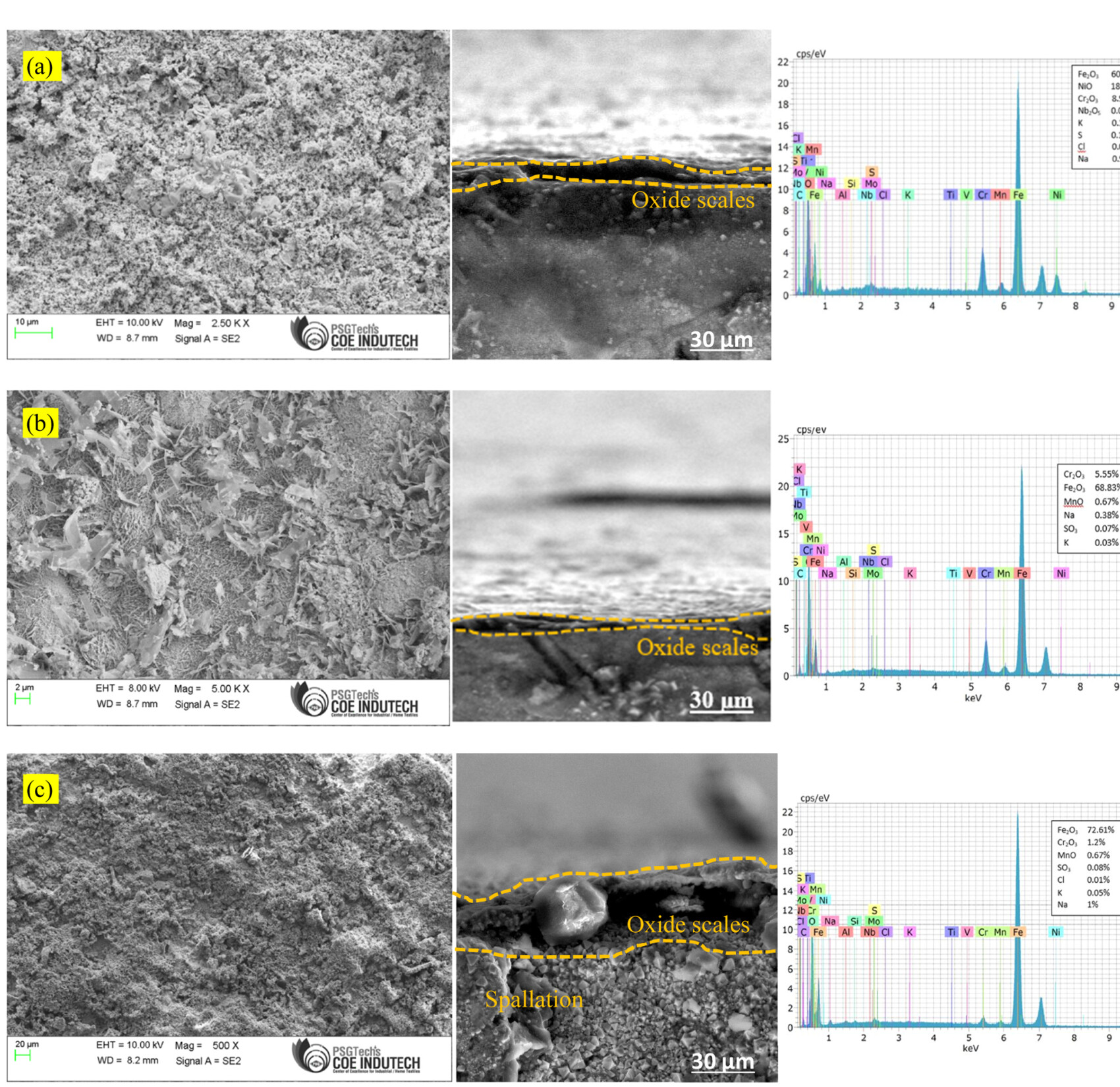
Coupons of the weld zone and both base metals were exposed to a K₂SO₄ + 60% NaCl molten salt environment at 700°C for 50 cycles, simulating the aggressive Type-1 hot corrosion a superheater tube can see in service. All coupons discoloured from grey to brown after the fifth cycle, but P22 was the only one to spall, starting around cycle 15, attributed to thermal-cycling stress and the mismatch in thermal expansion of its low-melting iron-based oxide eutectics.
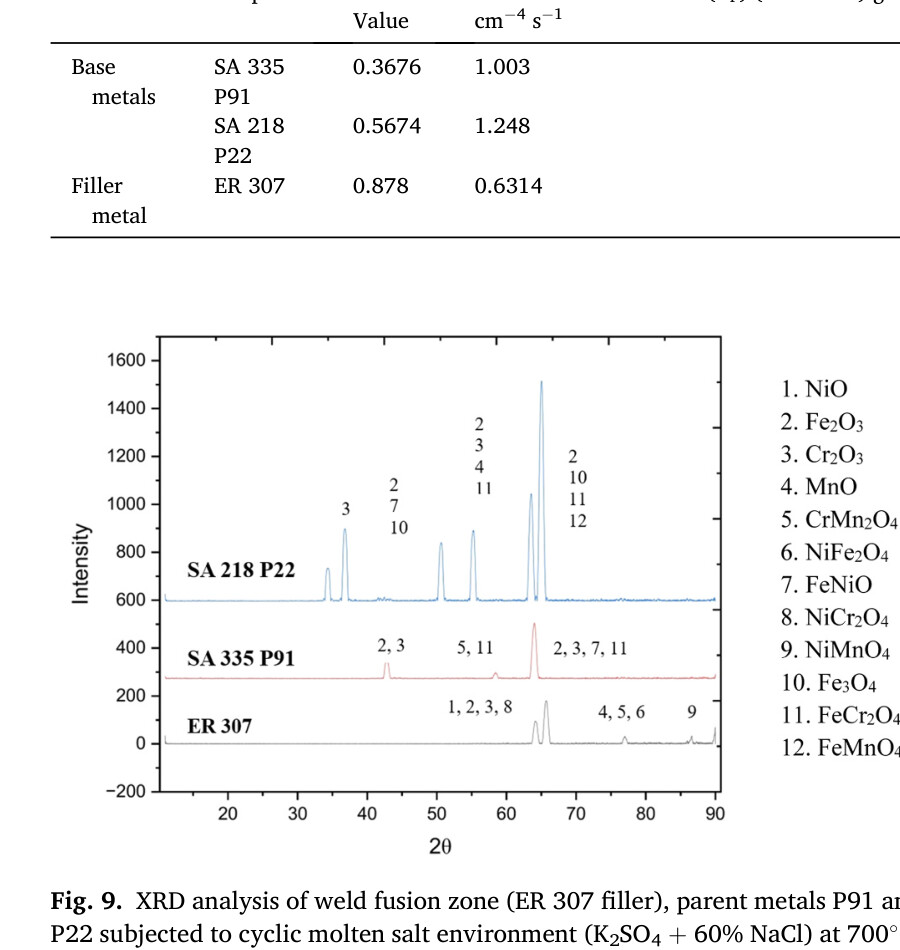
Thermogravimetric analysis gave parabolic rate constants of 1.003 ×10⁻⁶ g²cm⁻⁴s⁻¹ for P91, 1.248 ×10⁻⁶ for P22, and just 0.631 ×10⁻⁶ for the ER-307 weld zone, meaning the weld corroded slower than either base metal. XRD and SEM/EDS traced this to a protective NiFe₂O₄/NiCr₂O₄ spinel oxide layer forming on the weld surface, effectively blocking the ingress of corrosive species, while P22's Fe-rich Fe₂O₃/Fe₃O₄ scale offered comparatively little protection.
Real figures extracted from the published manuscript: pipe photographs, interface microstructures with EDS line scans, hardness profile, tensile and Charpy fractography, and hot corrosion analysis.