Two invention disclosures filed through VIT's IDF-B process with the Indian Patent Office, spanning AI-assisted welding process design and healthcare robotics.


Pressure vessels and boiler systems operating under extreme thermal and corrosive loads often need a transition joint between two very different materials: one chosen for creep strength at high temperature, the other for resistance to aggressive chloride or sulphate attack. P91, a modified 9Cr-1Mo ferritic-martensitic steel, is widely specified for creep performance in high-temperature piping. AISI 904L, a super-austenitic stainless steel with high Mo and Cr content, is chosen where sulphate- or chloride-rich environments would otherwise cause rapid degradation.
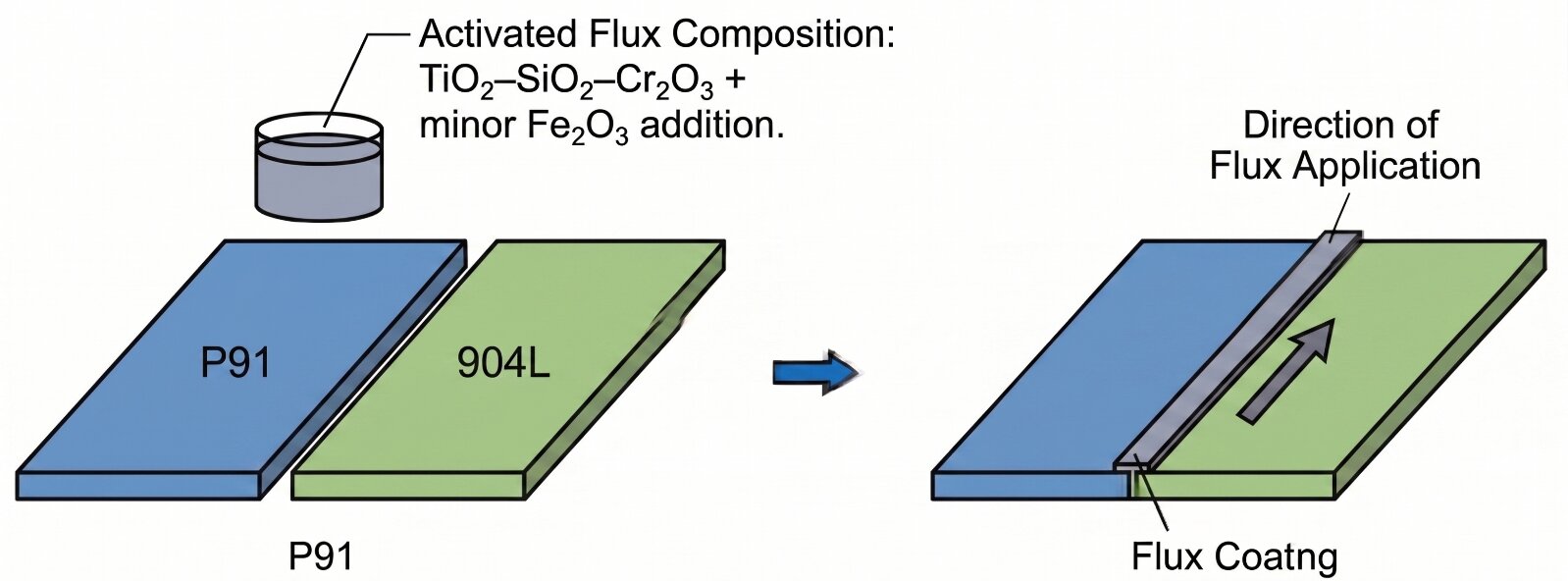
Joining these two is rarely attempted, for good reason: P91 is prone to hydrogen-assisted cold cracking, and 904L's high alloy content makes it prone to Mo/Cr segregation and secondary phase formation under uncontrolled thermal cycles. No prior literature reports a flux-assisted or AI-optimized approach for this specific combination. This disclosure proposes a multi-oxide activated flux, a TiO₂-SiO₂-Cr₂O₃ blend with a minor Fe₂O₃ addition, applied as a paste before autogenous laser welding, with the flux composition optimized computationally before any physical trial is run.
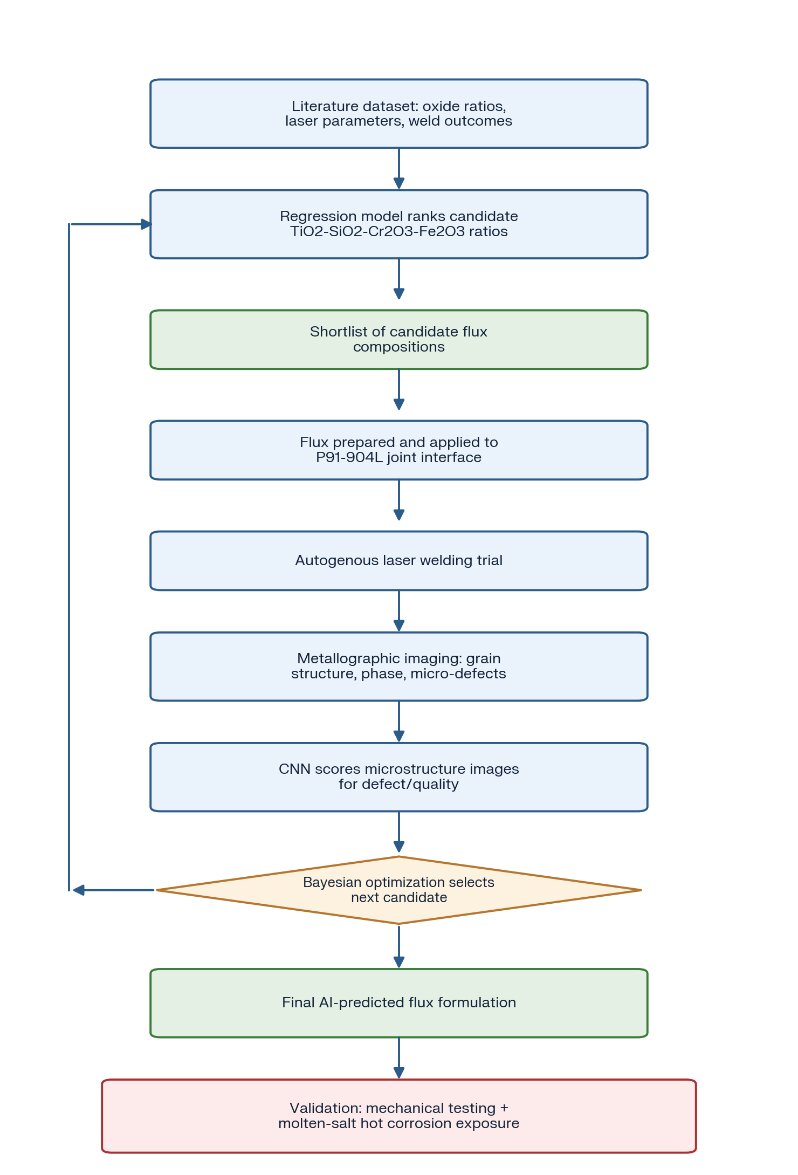
The optimization runs as a two-stage loop. First, a dataset assembled from published flux-assisted weld studies trains a regression model (Gradient Boosted Trees or Random Forest) to rank candidate TiO₂-SiO₂-Cr₂O₃-Fe₂O₃ ratios by predicted joint quality, narrowing a large compositional search space to a short, physically testable list. Second, once real samples exist, a convolutional neural network trained on metallographic cross-sections converts each image into a quantitative defect and quality score, feeding back as ground-truth labels that sharpen the regression model's next round of predictions. Bayesian optimization decides which untested composition to try next, prioritizing whichever candidate the model is currently most uncertain about, rather than testing exhaustively.
The flux itself is applied in a spatially graded arrangement: a Cr₂O₃-Fe₂O₃-enriched formulation toward the P91 side, a TiO₂-SiO₂-enriched formulation toward the 904L side, overlapping gradually near the fusion interface. That grading lets the flux chemistry match each parent metal's different metallurgical needs within a single weld pass.
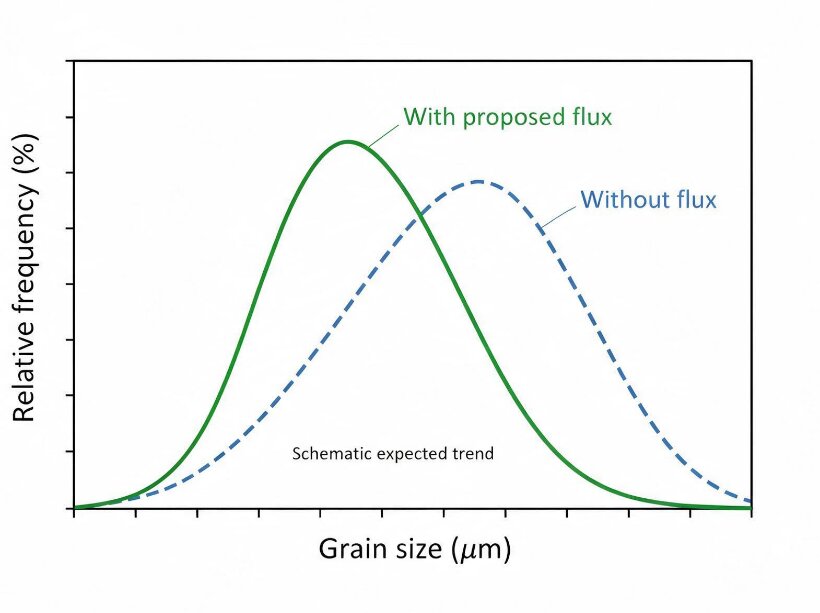
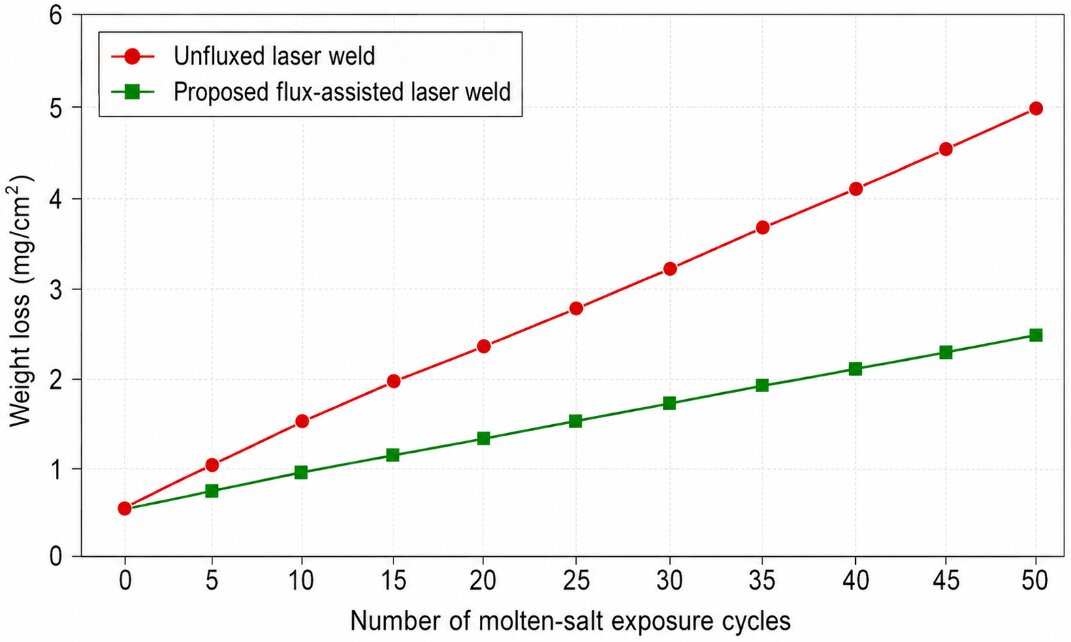
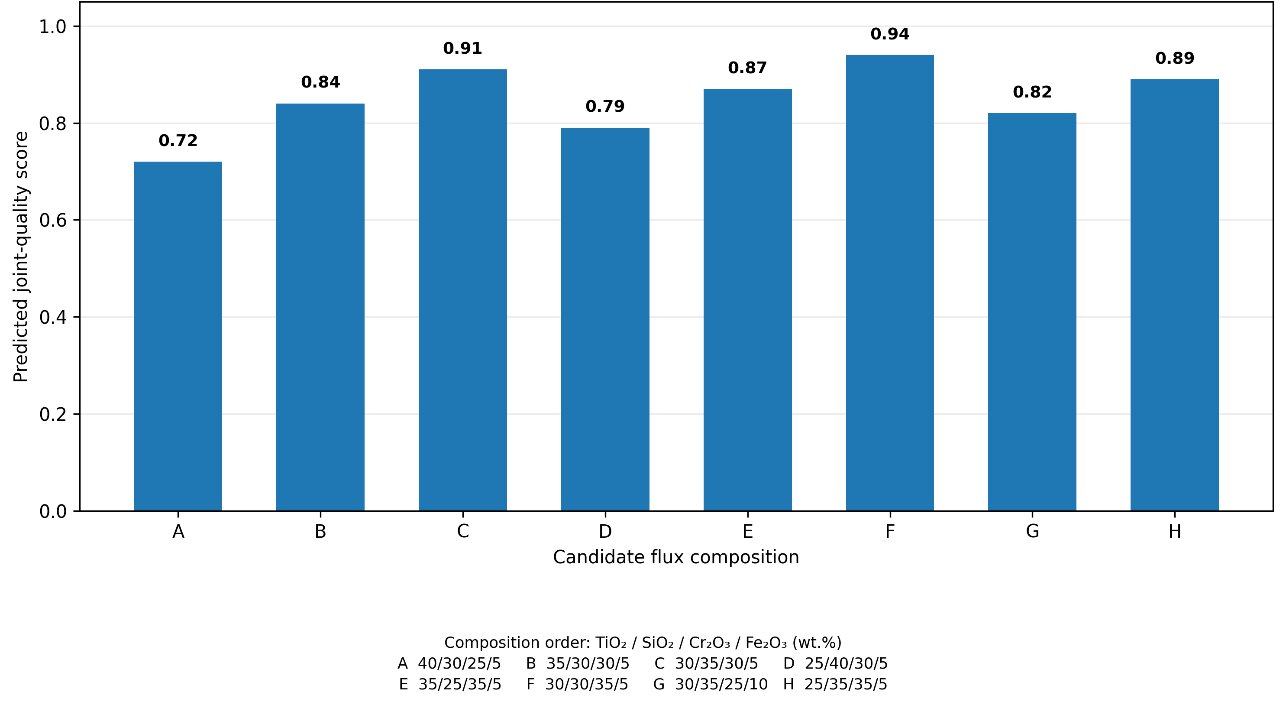
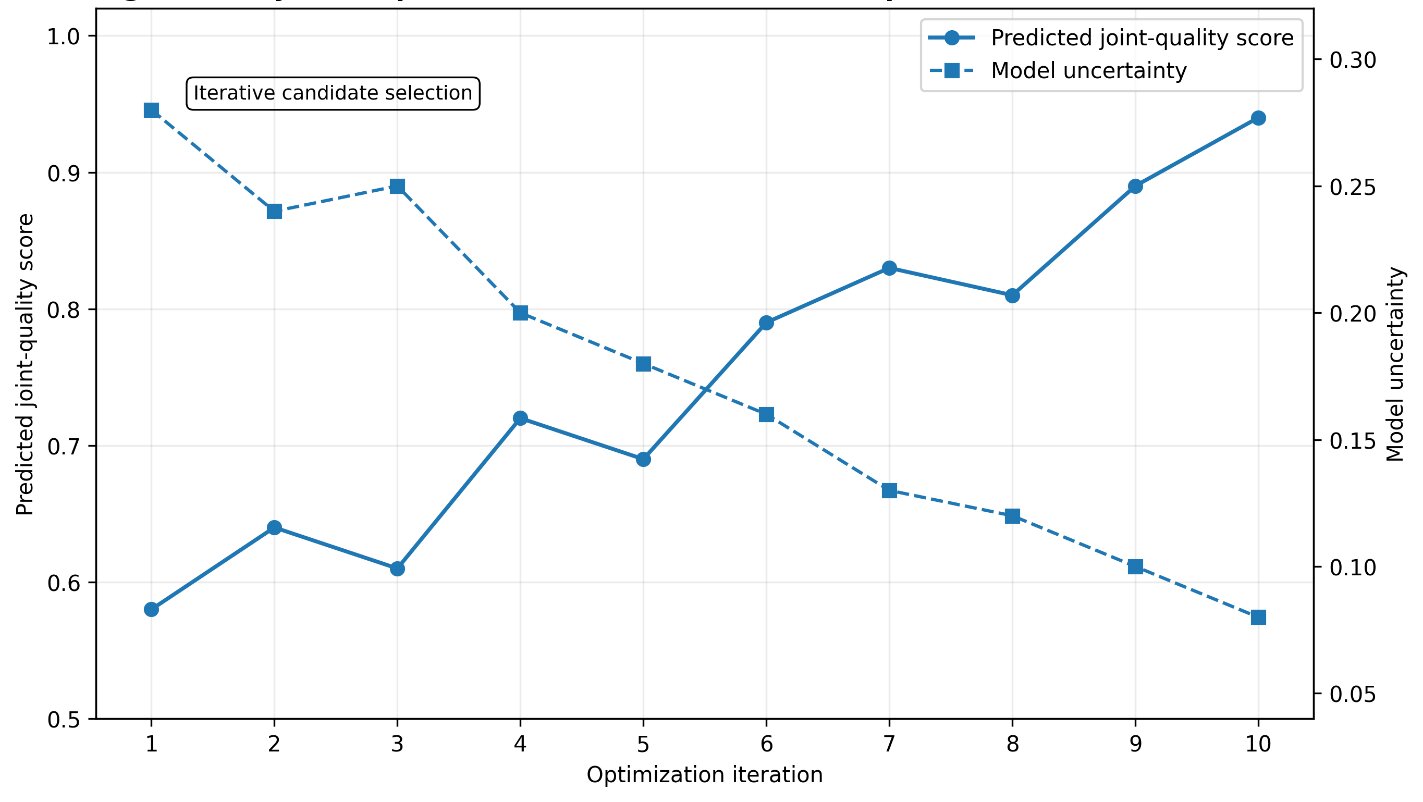
Every predictive chart in this disclosure, grain size, tensile correlation, joint-quality ranking, is explicitly illustrative rather than experimentally validated: this patent describes a proposed methodology and the AI framework meant to guide the physical welding trials, not completed results. The physical welding, metallographic, mechanical, and hot-corrosion validation is the next phase of this work.
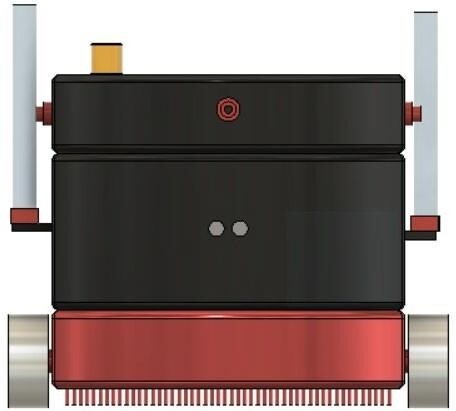
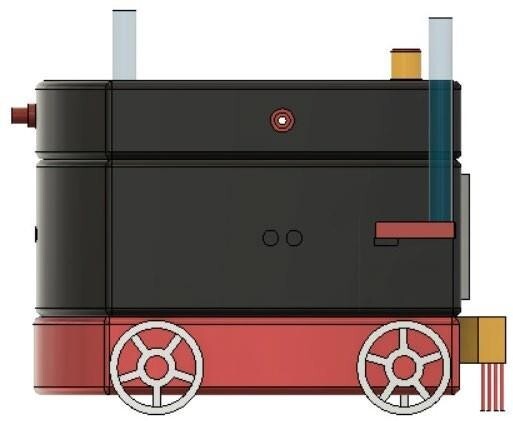
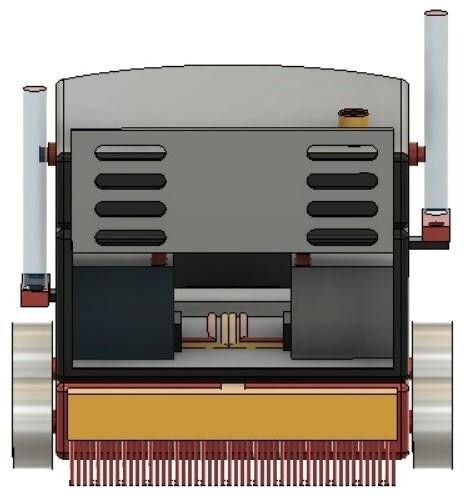
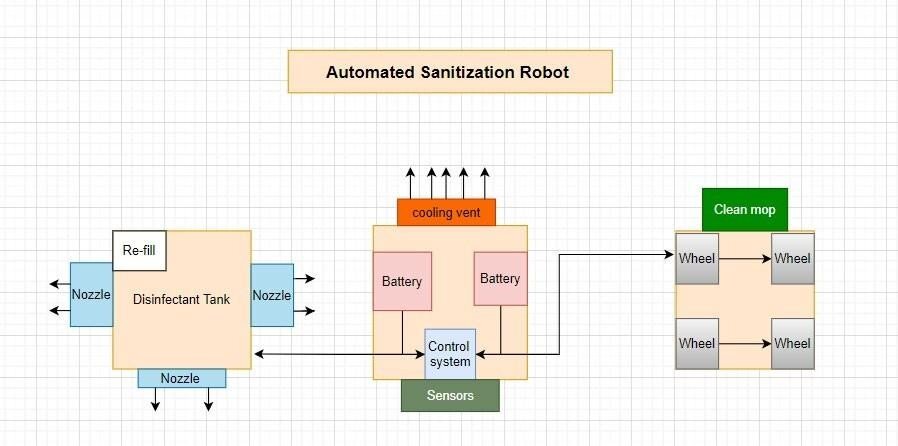
Manual cleaning and disinfection in hospitals and quarantine centres is often inadequate, and repeating it by hand across hundreds of patient visits a day is genuinely impossible to do consistently. Existing high-end sanitization robots exist, but their cost puts them out of reach for smaller hospitals, gyms, schools, and government facilities. This disclosure covers a low-cost, semi-automated wheel-based robot that combines UV sterilization, disinfectant spraying, and floor mopping into a single platform built from recycled materials, with safety and affordability treated as core design constraints rather than afterthoughts.


Liquid sanitization uses bleach (sodium hypochlorite), selected through a Pugh Matrix screening process for being effective, cheap, and easy to source. The robot body, except its top face, carries UV lamps to sterilize any wall surface it contacts, while concentrated UV rays separately target the floor and a nozzle sprays disinfectant at multiple heights and angles for full coverage. A soft brush mop finishes each pass, wiping the disinfectant liquid off the floor so sanitization, sterilization, and mopping complete in a single device pass.
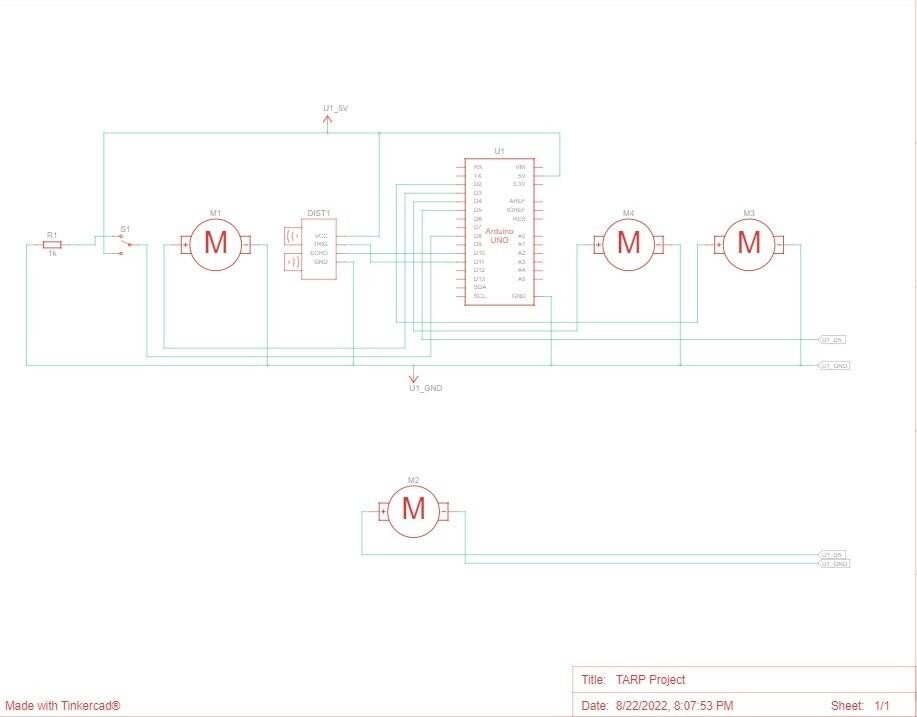
Navigation relies on sensor fusion: ultrasonic sensors measure distance and detect obstacles, infrared sensors detect human motion and immediately halt UV lamp operation when a person is nearby, and a LiDAR plus wide-angle camera combination builds an environmental map. Infrared thermal imaging cameras track shell temperatures with faster reaction speed and wider coverage than point sensors. Path planning uses the Dijkstra algorithm over a 2D grid representation of the workspace, with a Raspberry Pi serving as the electronic control unit for image sensing and position determination. A 24V direct supply powers the UVC lamps, Arduino board, and drive circuit; the robot remains semi-automatic, needing a human for deployment, refilling, and charging.


A follow-on disclosure adds four AI modules on top of the same sensor hardware, validated against the baseline sensor-only system across controlled deployment scenarios in simulated hospital rooms. Each module was tested independently first, then together, to separate individual contributions from what happens when all four run in a unified feedback framework.


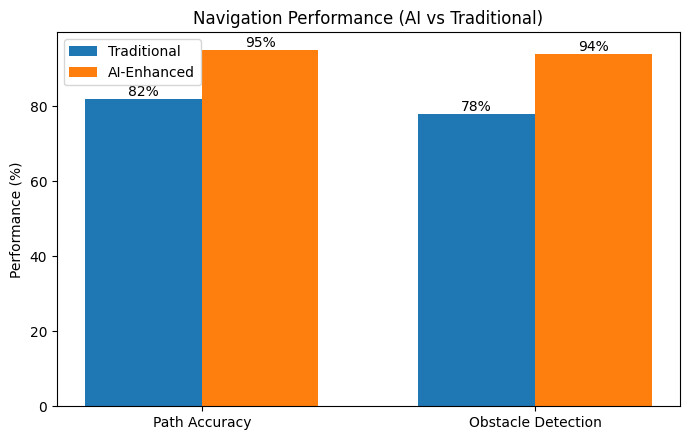
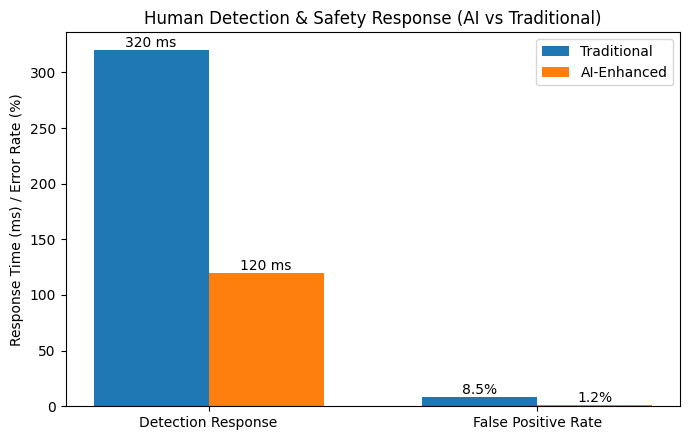
The navigation module adds a reinforcement learning layer on top of the existing Dijkstra path planning, learning which zones of a room are consistently cluttered and where sensor blind spots sit. Over repeated sessions, navigation accuracy rose from 82% to 95% and obstacle detection from 78% to 94%. The human detection module fuses a CNN over thermal imaging and motion sensor data, cutting detection response time from 320ms to 120ms and false positive triggers from 8.5% to 1.2%, with an added LSTM layer predicting a person's movement direction so the robot reroutes before someone gets close rather than reacting after the fact.
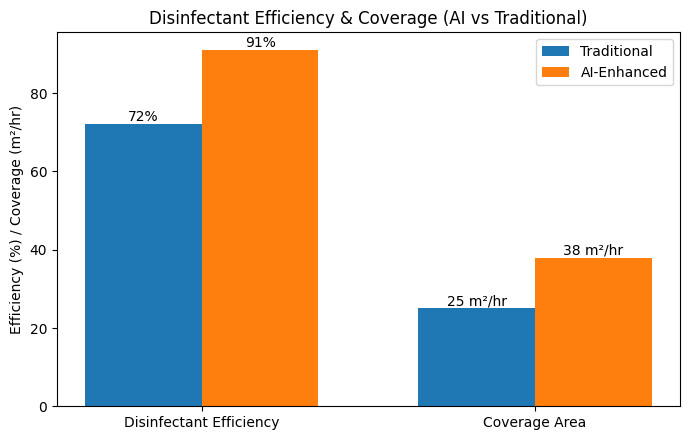
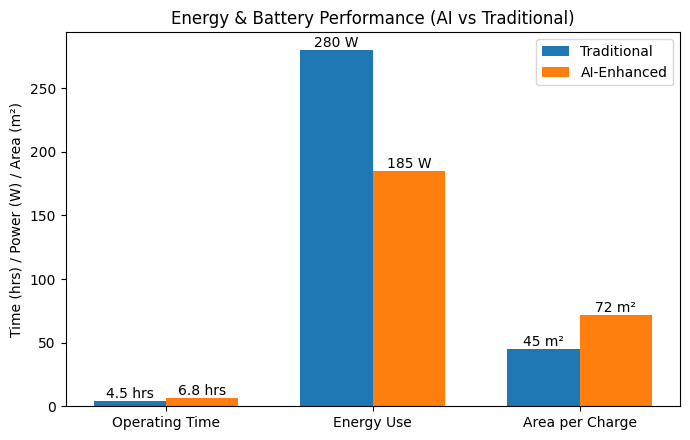
The disinfectant optimization module uses Bayesian inference over surface type, temperature, and humidity to adjust spray intensity and nozzle angle in real time, raising disinfectant efficiency from 72% to 91%, increasing coverage from 25 to 38 m²/hour, and cutting chemical use by 26%. The energy management module uses gradient boosting to track and redistribute power across motors, lamps, and pumps based on what the robot is actively doing, extending operating time from 4.5 to 6.8 hours and cutting average power draw from 280W to 185W.
Run together, the four modules compound: smarter navigation means the spray module wastes less time on already-covered zones, fewer false-positive stops save both time and energy, and shorter, smarter paths mean the drive motors draw less power in the first place. That compounding is the actual point of a unified feedback framework instead of four independent subsystems.