← Back to research
Manuscript · 2026
Microstructure–property correlation and fracture behaviour of PCGTAW Inconel 625 and AISI 316L dissimilar joints using ER307 filler
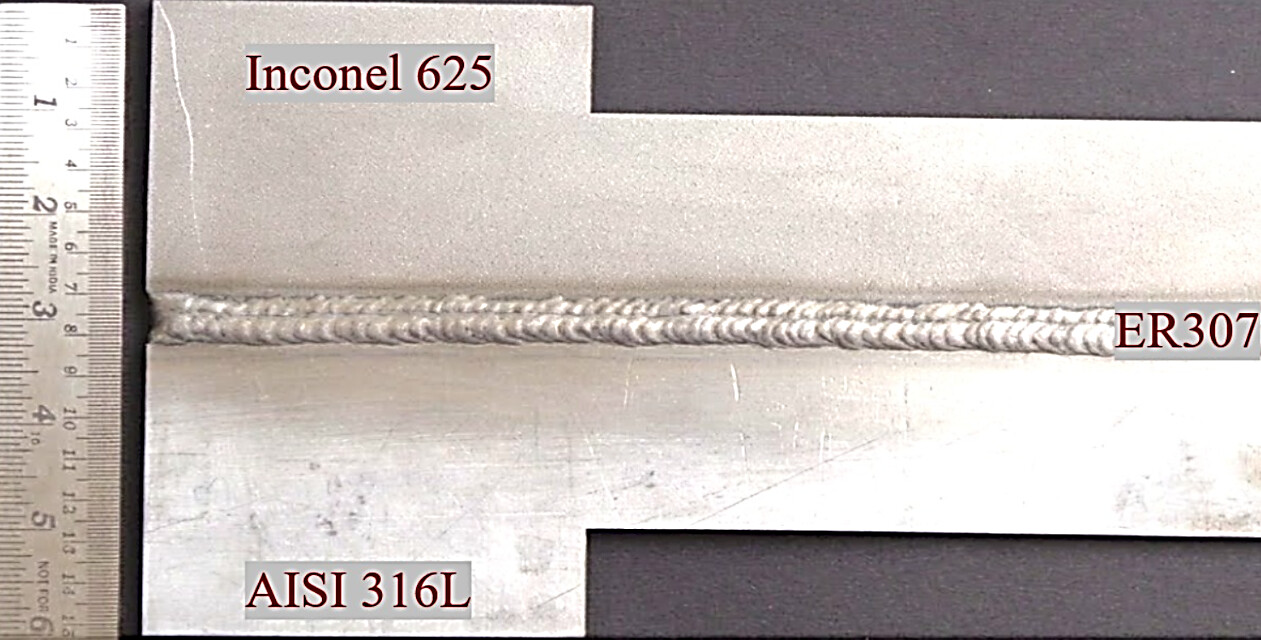
Inconel 625 and AISI 316L both show up in nuclear reactors, deep-sea piping, and aerospace structures, but for very different reasons. Inconel 625 is a nickel-chromium superalloy with exceptional strength and corrosion resistance, but it is expensive. AISI 316L is a far cheaper austenitic stainless steel with adequate performance for less severe zones of the same system. Welding the two together lets each material do the job it is actually needed for, but the joint has to hold up mechanically where two very different crystal structures and thermal expansion behaviours meet.
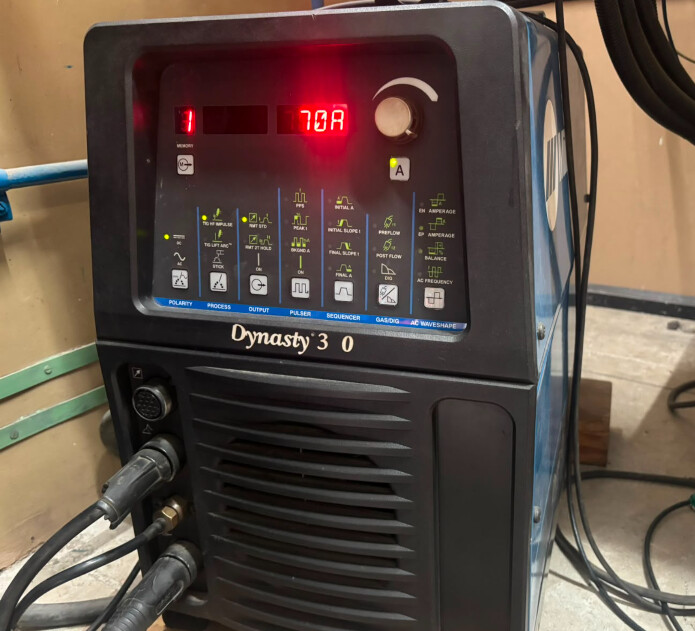
This is, as far as we could establish, the first reported use of ER307 filler for joining these two specific alloys by multi-pass pulsed current gas tungsten arc welding (PCGTAW). We characterized the joint's microstructure, hardness profile, tensile and notch-tensile strength, Charpy impact toughness, and fracture surfaces, and traced the elemental transitions across both fusion boundaries with SEM/EDS.
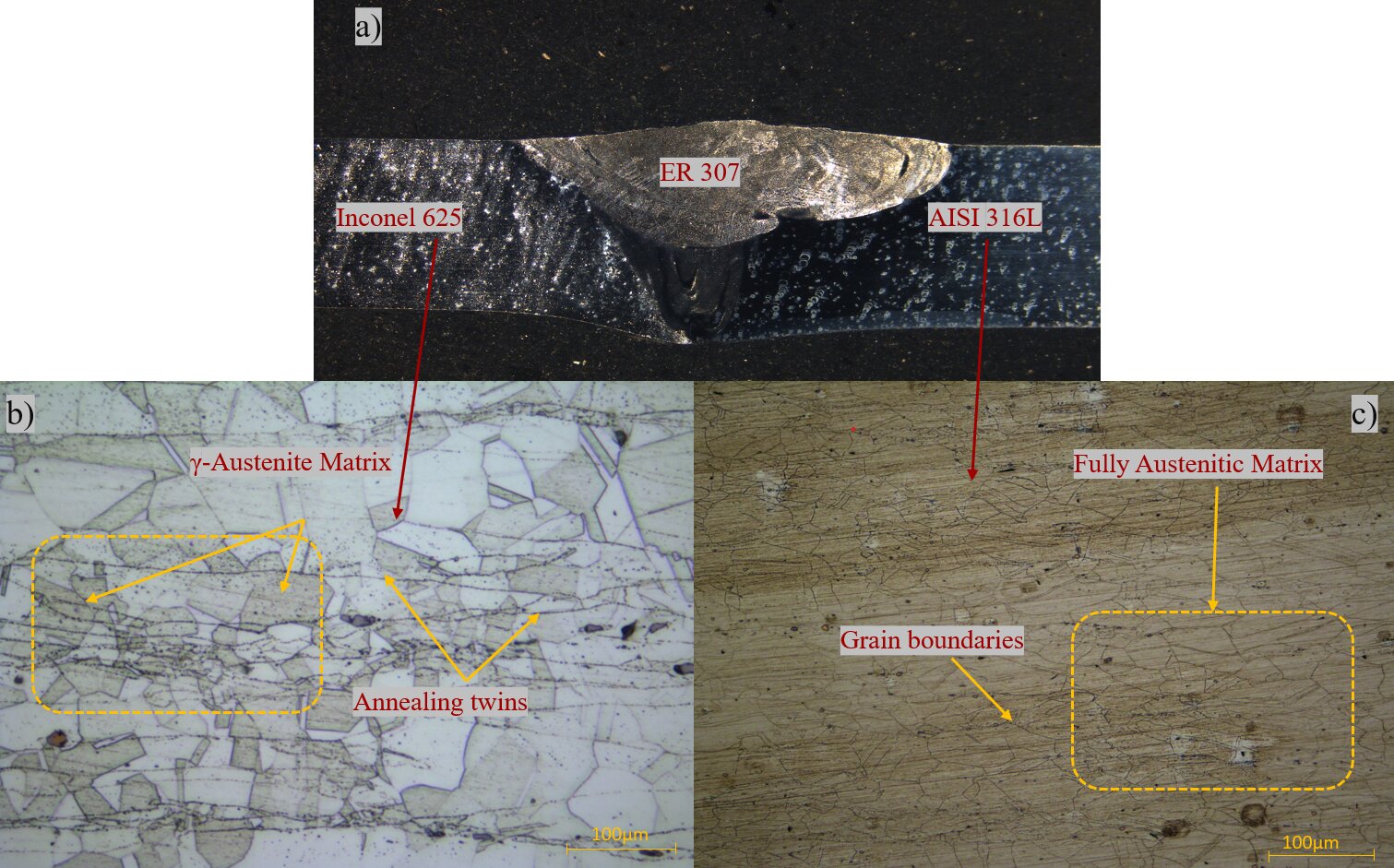
The Inconel 625 base metal showed a fully recrystallized single-phase γ-austenitic structure with equiaxed grains and a high density of annealing twins, a hallmark of low-stacking-fault-energy nickel superalloys. AISI 316L, by contrast, showed a fully austenitic matrix with more equiaxed grains but noticeably fewer annealing twins, consistent with the inverse relationship between stacking fault energy and twin density in austenitic alloys.
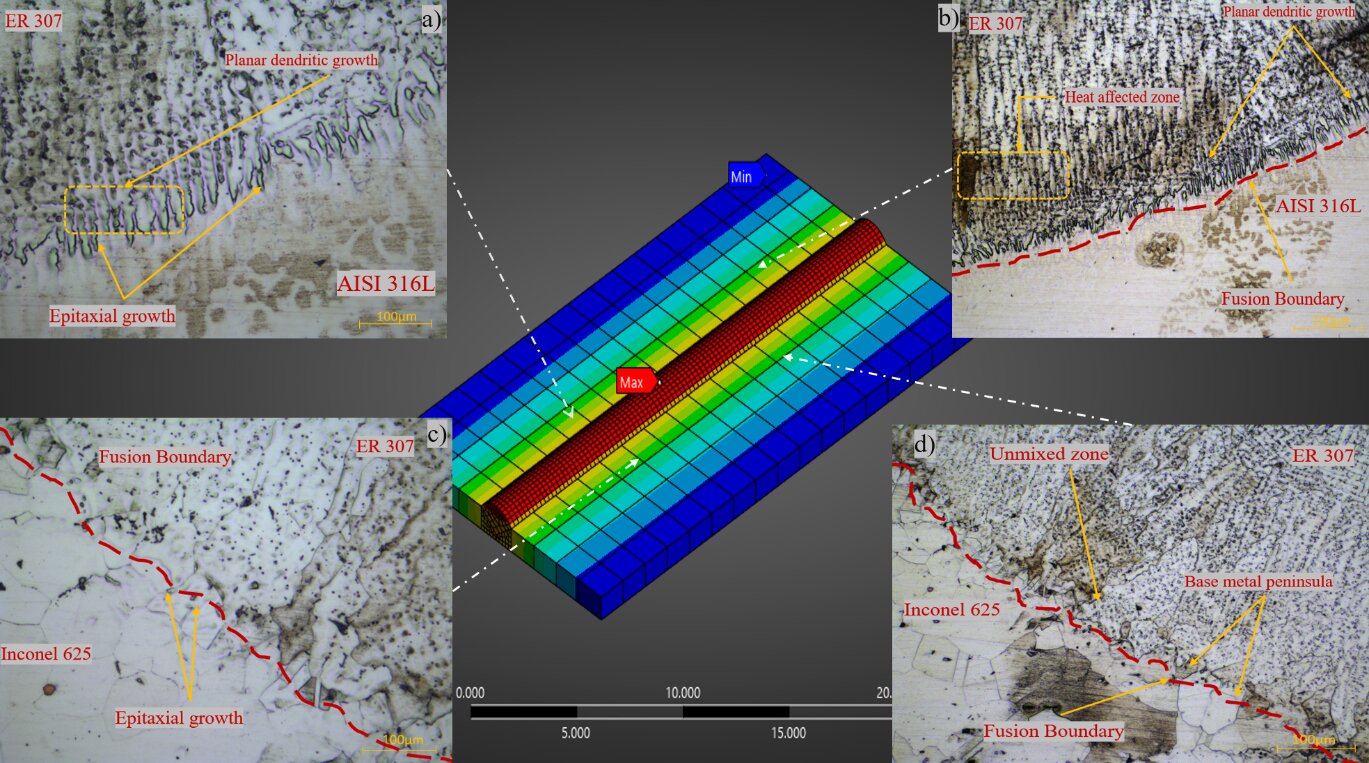
At the ER307–AISI 316L boundary, a planar dendritic band formed adjacent to a well-defined, continuous fusion line, with the solidification mode shifting from planar to columnar dendritic as the thermal gradient relaxed deeper into the weld pool. Columnar dendrites nucleated directly from the existing 316L grains with no discontinuity in crystallographic orientation, a textbook signature of epitaxial growth in near-similar austenitic systems.
The ER307–Inconel 625 boundary told a more complicated story, as expected given the much greater compositional and thermophysical mismatch between a Ni-based superalloy and an austenitic filler. The fusion boundary was irregular rather than planar, and a narrow, continuous unmixed zone ran along the Inconel side, with a distinct base-metal peninsula of partially melted Inconel 625 surrounded by ER307 filler, placing this joint firmly in the beach-peninsula-island family of unmixed-zone morphologies. Despite that geometric complexity, we saw no solidification cracking anywhere along this boundary, and the epitaxial bonding remained continuous throughout.
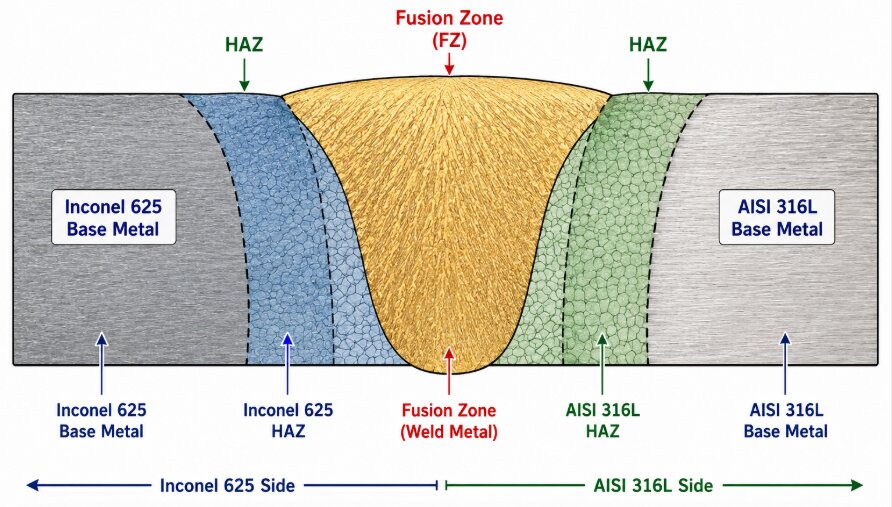
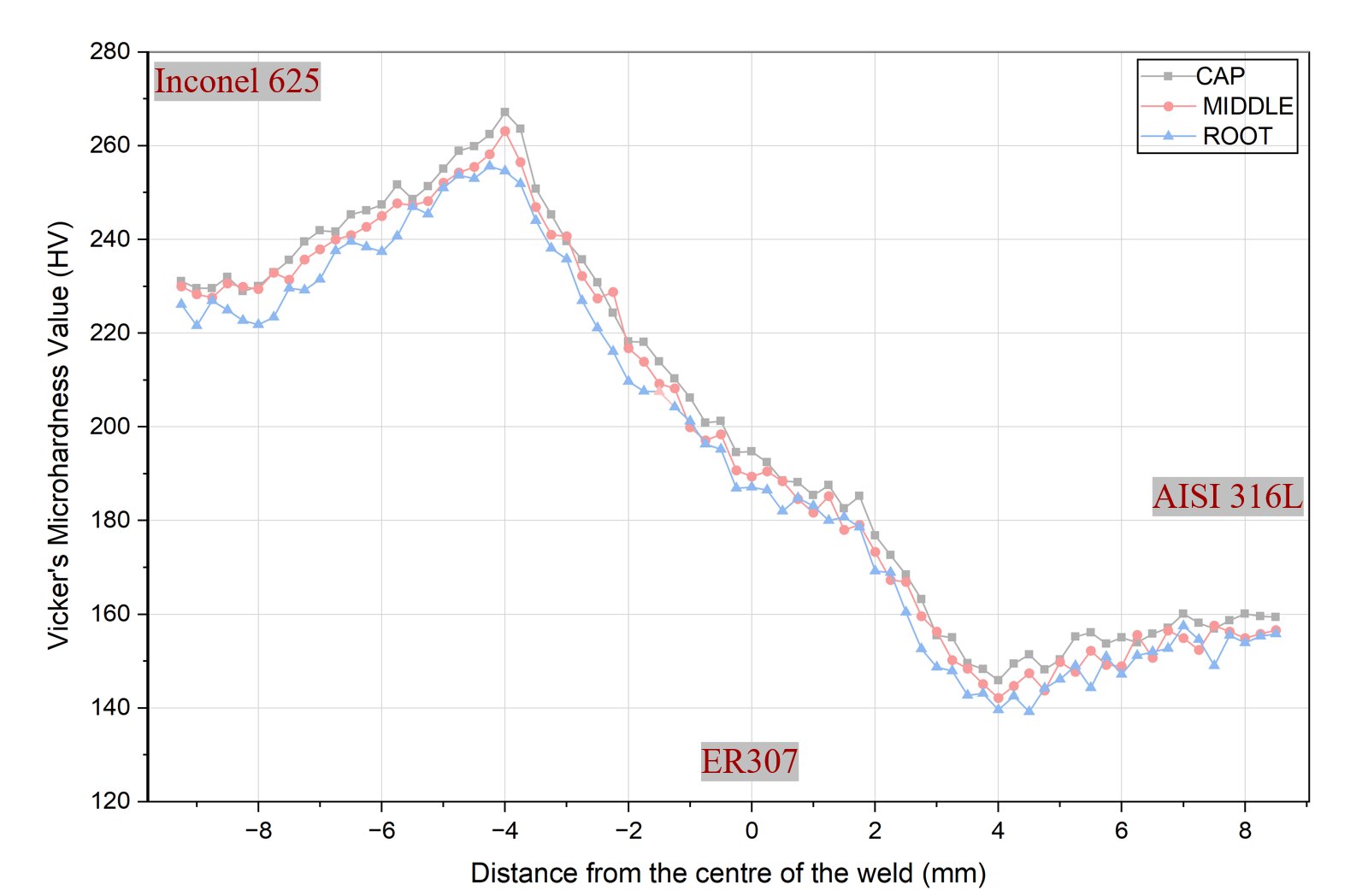
The Vickers microhardness profile across the joint was sharply asymmetric. Inconel 625 base metal levelled off around 230 HV, typical for a Mo/Nb-strengthened γ-austenite matrix. Its HAZ, however, peaked at 267.1 HV in the crown pass, about 16% above the base metal, driven by secondary carbide and Nb-rich phase precipitation along grain boundaries from the weld's thermal cycle.
The AISI 316L side went the other way entirely: a baseline hardness of 160 HV dropped to around 140 HV within its HAZ, a roughly 12% softening. Unlike the Inconel side, there was no precipitation hardening here to offset the thermal cycle, so grain coarsening in the HAZ reduced grain boundary density and lowered strength, consistent with the Hall-Petch relationship.
Within the ER307 fusion zone itself, hardness graded smoothly between the two extremes, tracking the Ni, Cr, and Fe content revealed by EDS line scans, and running higher near the Inconel boundary than near the 316L boundary. Multi-pass deposition added its own signature: the cap pass ran hardest and the root pass softest, since later passes progressively temper the earlier ones.
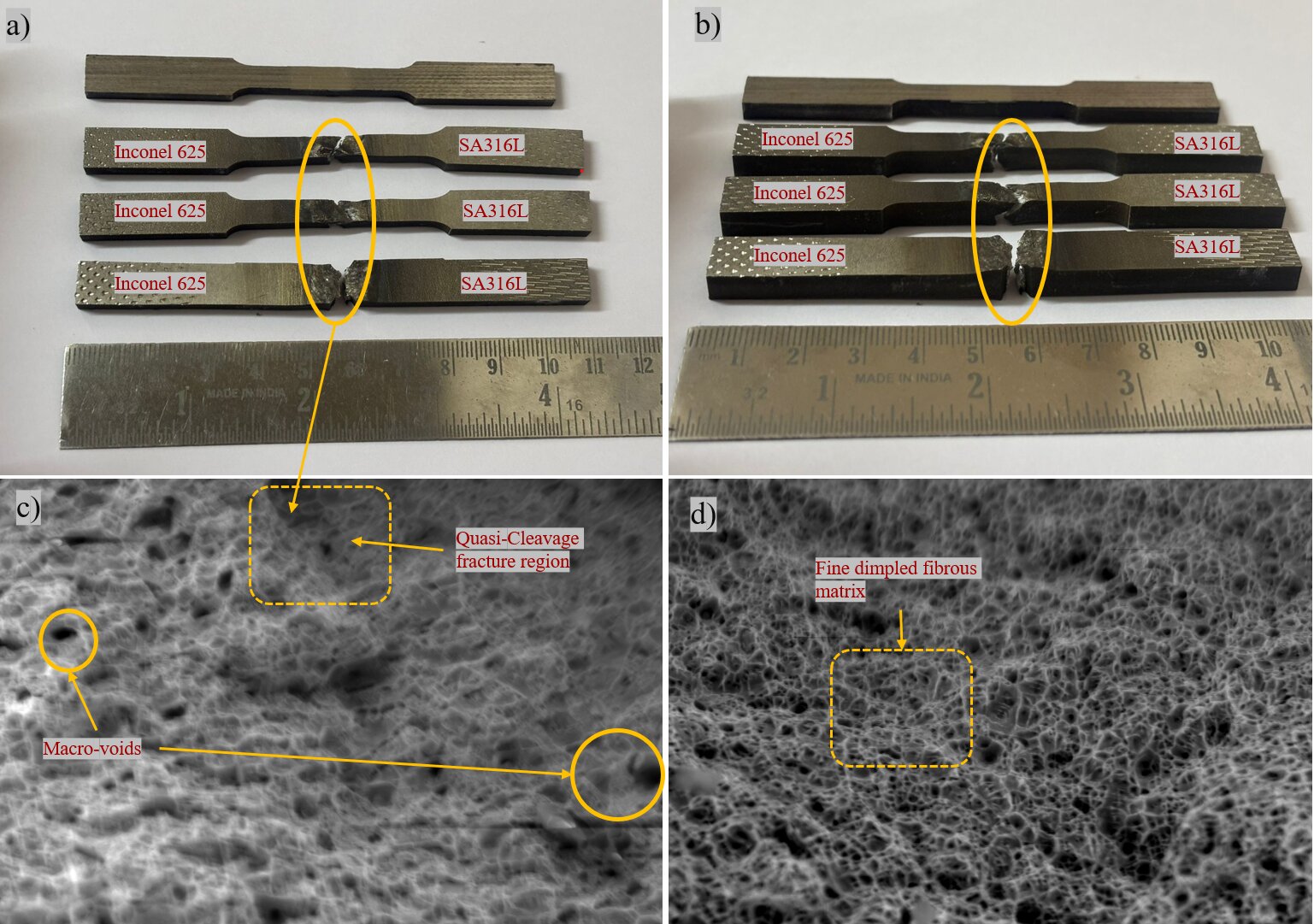
Cross-weld tensile testing gave ultimate tensile strengths of 711 and 738 MPa across two un-notched specimens, with yield strengths of 487 and 464 MPa and elongation of 23.5–24.5%. That places the joint above the minimum specification for AISI 316L (UTS ≥ 560 MPa) and close to the expected range for Inconel 625 plate itself (UTS ≥ 760 MPa), a strong result for a filler developed primarily for stainless-to-carbon-steel joints rather than superalloy-to-stainless bridging. Notch tensile testing reached 962 MPa, confirming the joint holds up well under stress-concentrated loading.
Fracture in both un-notched tests occurred near the weld rather than deep in the base metal, and SEM fractography showed a finely dimpled, fibrous matrix with closely packed equiaxed micro-voids, the classic signature of ductile rupture in austenitic and Ni-based alloys. A mix of dimples and quasi-cleavage facets pointed to a transitional fracture mode common in high-strength austenitic and Ni-based welds, but nothing suggested the weld metal or fusion boundaries were the mechanically limiting region of the joint.
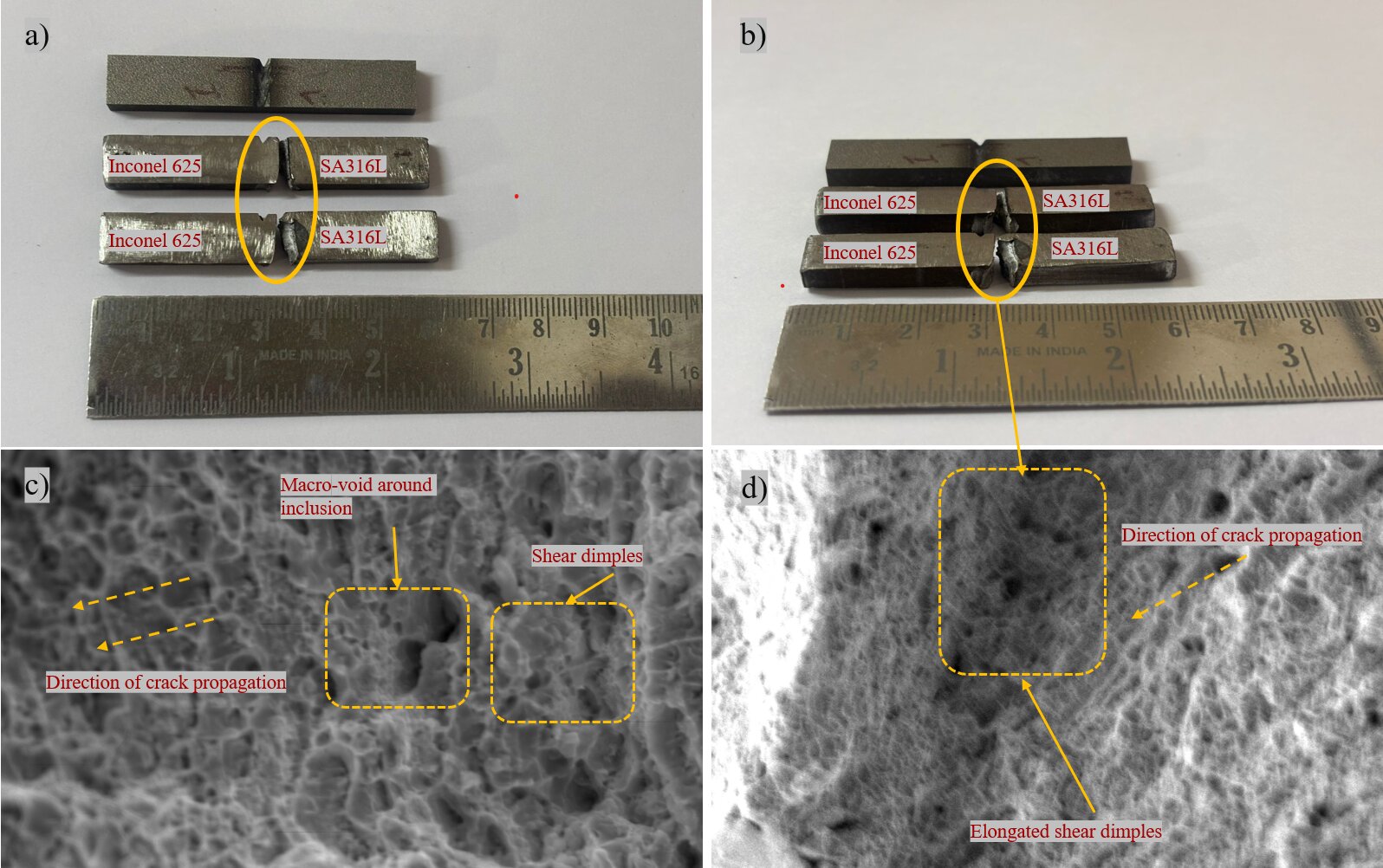
Charpy V-notch testing, with the notch placed in the weld metal, gave absorbed energies of 54 J and 52 J at room temperature, a difference of just 2 J between specimens, indicating good repeatability and no gross defects like porosity or lack of fusion. Fractography confirmed a primarily ductile, shear-controlled fracture: a fibrous background of closely packed shear dimples, with a large macro-void likely nucleated at a locally segregated region under the high strain rate of impact loading, and elongated shear dimples aligned with crack growth direction, a shear-lip pattern typical of dynamic rather than quasi-static loading.
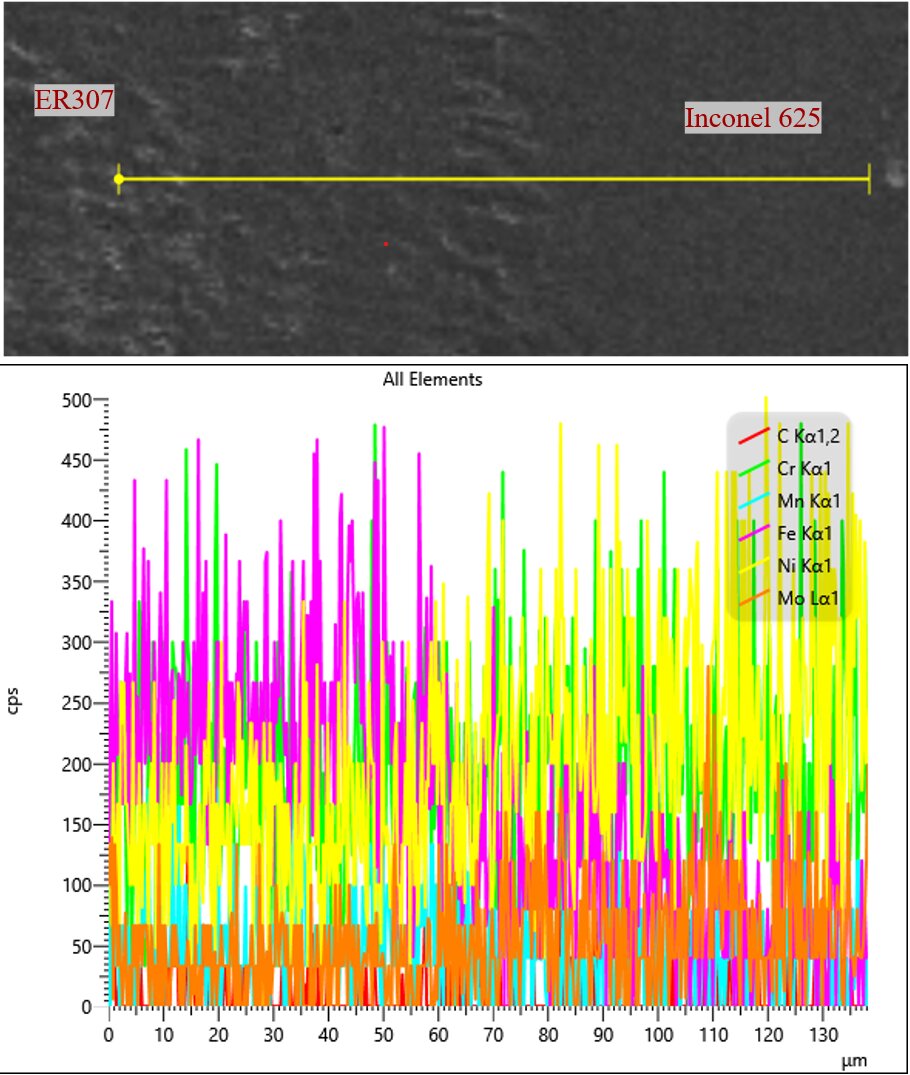
Line-scan analysis across the ER307–Inconel 625 interface showed high Ni and Mo intensity dropping steadily toward the weld metal, a high Fe signal on the ER307 side dropping steeply toward the fusion boundary, and elevated Mn reflecting the filler's composition, with no abrupt spikes suggesting a metallurgically sound interface free of severe segregation. Elemental mapping confirmed a Ni-rich, Nb- and Mo-bearing zone transitioning cleanly into an Fe-enriched region.
The ER307–AISI 316L interface behaved differently: line scans of Ni, Cr, and Fe were gradual and continuously overlapping rather than showing a sharp step, reflecting the closer chemical similarity between the austenitic filler and the austenitic base metal. Elemental mapping showed Ni, Fe, and Cr uniformly and flatly distributed across the interface, indicating real intermixing rather than a sharp fixed boundary.
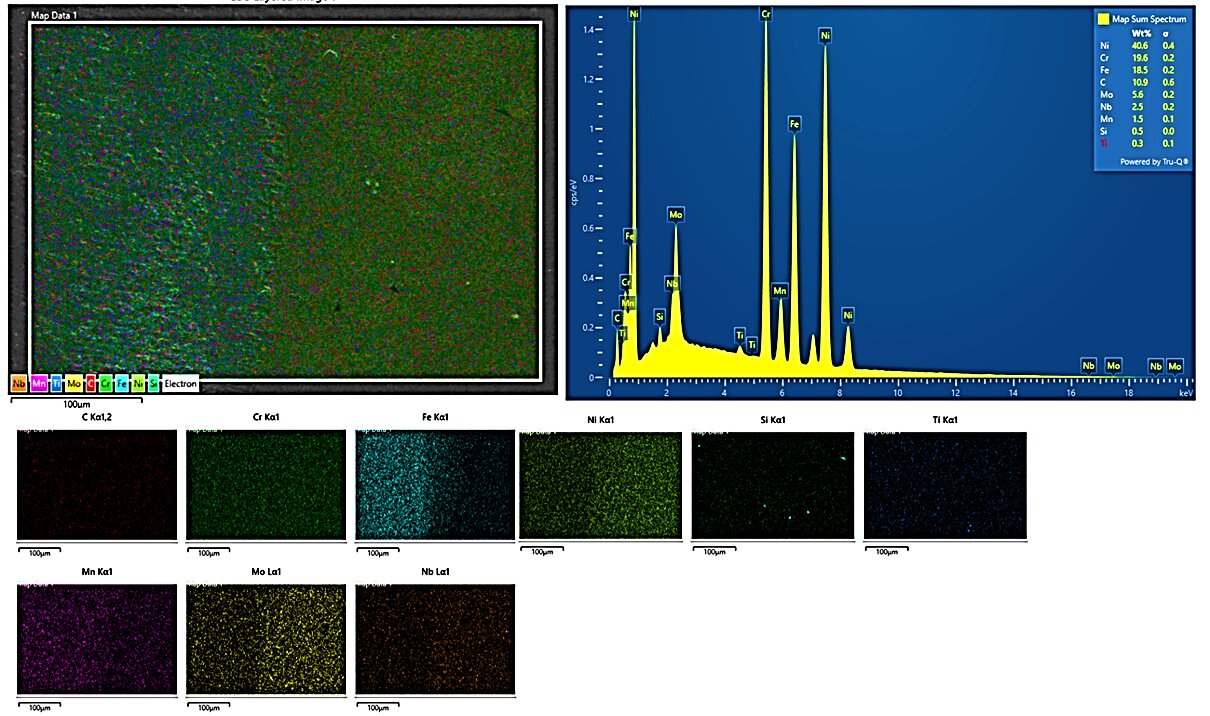
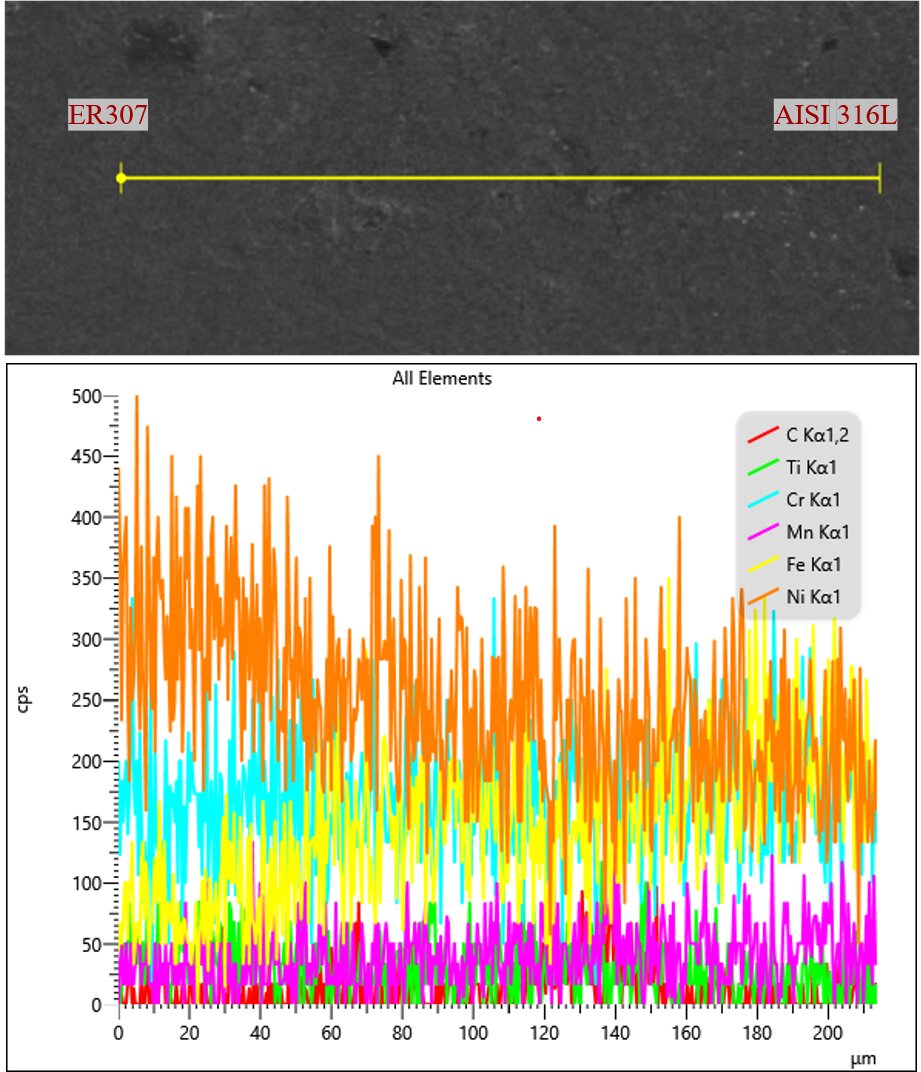
No interfacial cracking, no continuous carbide networks, and no intermetallic segregation were found at either fusion boundary. Both interfaces, despite very different compositional mismatches, produced a metallurgically sound joint.