← Back to research
Under peer review
Heat transfer analysis of solid and gyroid-infused trapezoidal fins under natural convection: a comparative study
Passive cooling fins live or die by how much surface area they can expose to moving air per unit of material, since heat rejection follows Newton's law of cooling: rate is proportional to the convective coefficient, the exposed area, and the temperature difference. The usual way to get more surface area is simply to add more fin material, but that adds weight and cost, a real constraint in aerospace avionics, EV battery thermal management, and portable electronics.
This study asked whether a gyroid lattice, a Triply Periodic Minimal Surface (TPMS) structure with an unusually high surface-area-to-volume ratio, could replace the solid core of a conventional trapezoidal fin and improve thermal performance while cutting material weight. We built both geometries (Aluminium 6061, 250 × 180 mm base, 25 mm fin height, tapering from 5 mm to 3 mm thickness) and ran steady-state natural convection simulations across two independent platforms, ANSYS Workbench and Fusion 360, to cross-check the results.
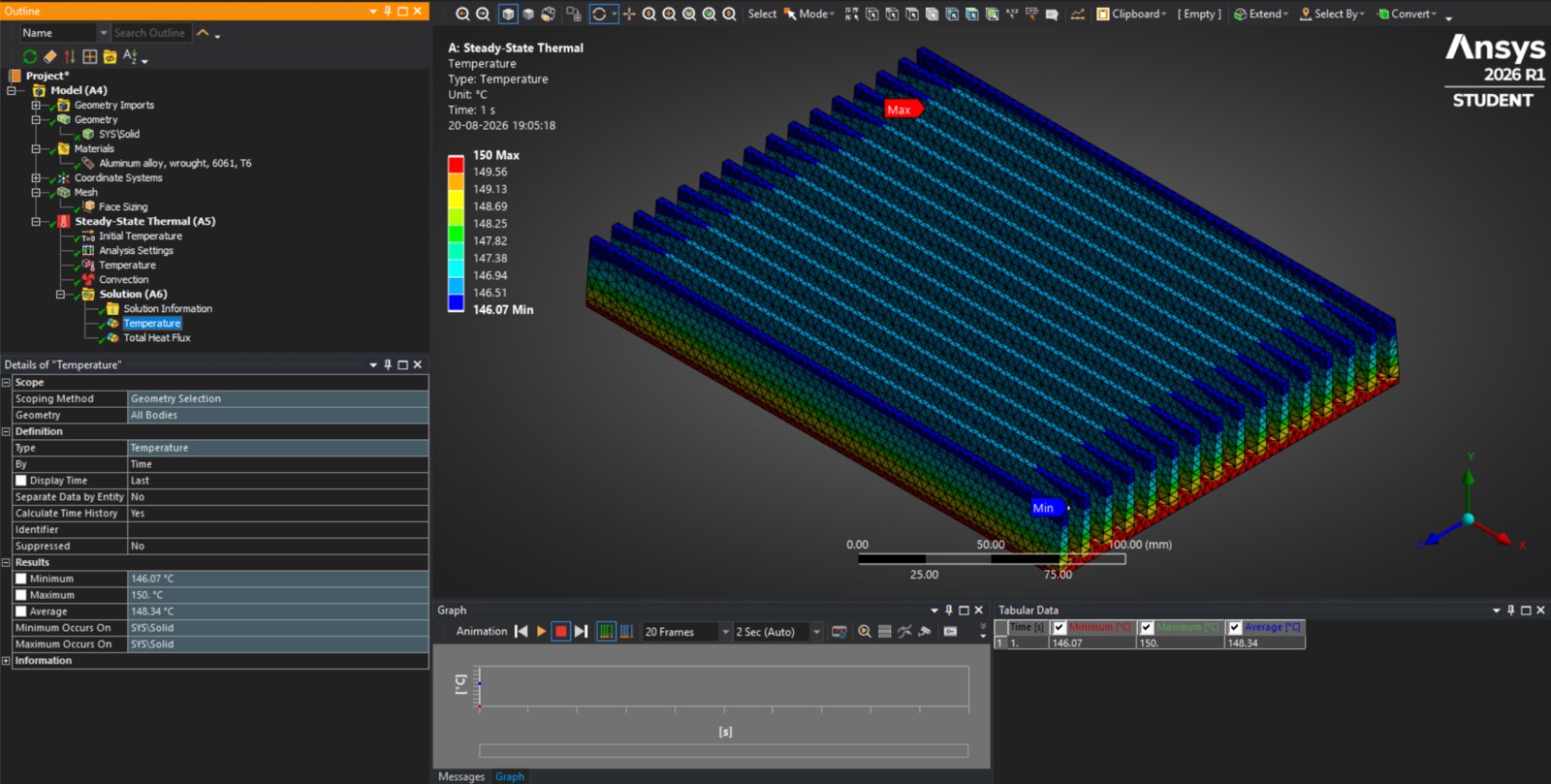
Both designs kept identical external dimensions and boundary conditions so that lattice topology, not geometry, would explain any performance difference. The gyroid core used a sheet-based TPMS infill defined by the standard gyroid level-set function, chosen because it offers continuous wall support and promotes uniform stress and thermal distribution through the lattice. The workflow ran: fin design selection, material selection, baseline CAD in ANSYS, gyroid lattice generation in nTop, simulation setup in both Fusion 360 and ANSYS, thermal analysis of each design, then a direct comparison.
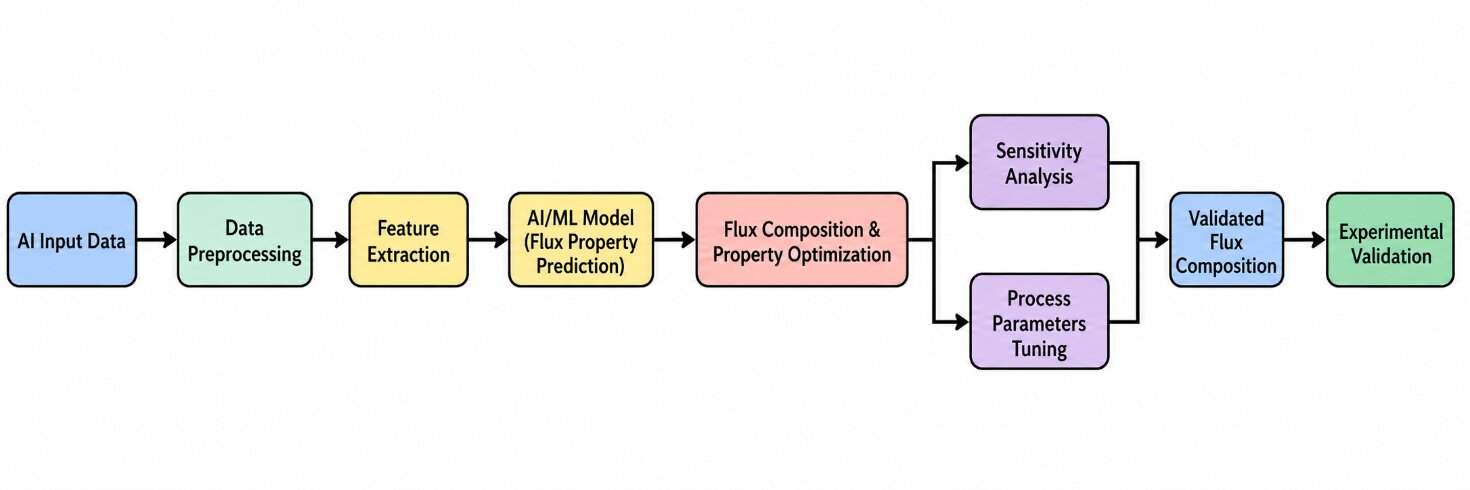
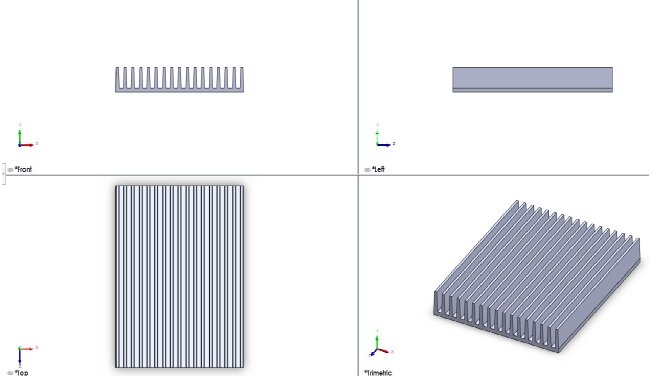
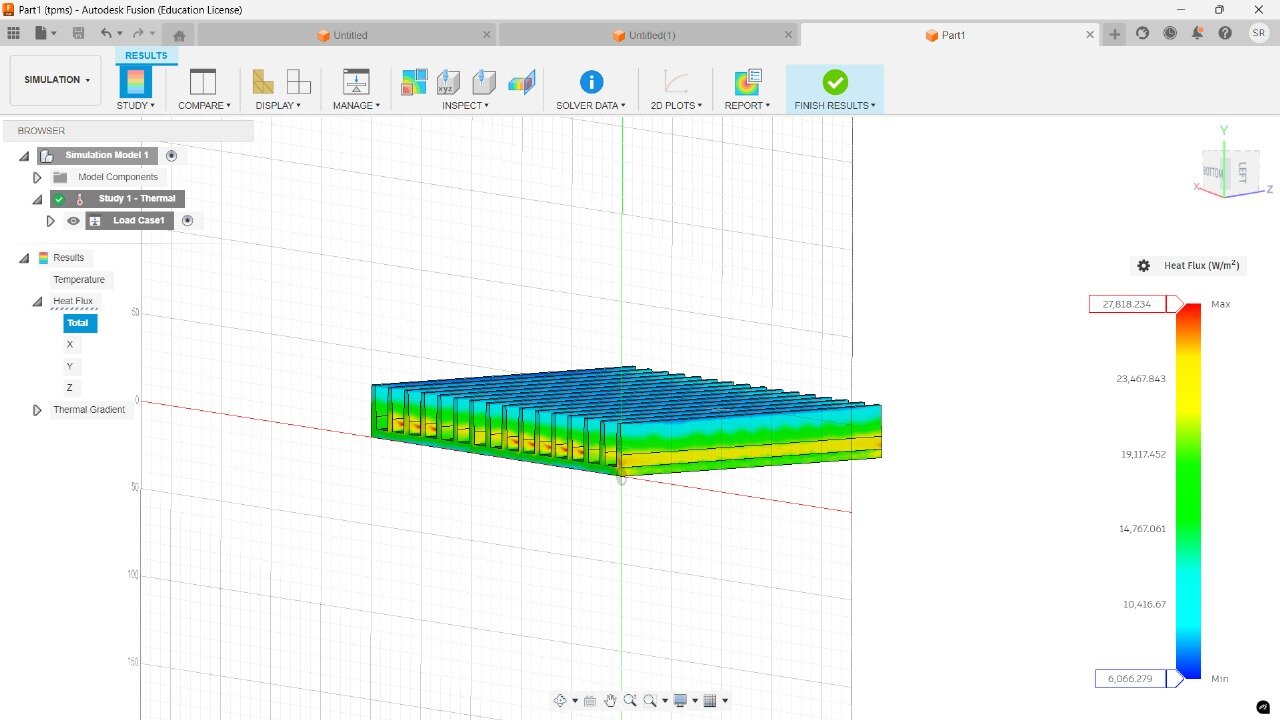
Under Fusion 360, the solid fin reached a peak heat flux of 27,818.23 W/m² at the base plate, the main conductive pathway into the array, dropping to 6,066.28 W/m² at the fin tips, and held a tight base-to-tip temperature difference of just 2.36°C (150.00°C at the base, 147.64°C at the tip). That small ΔT is actually informative: it means conduction through the aluminium isn't the bottleneck here, the surface convective coefficient is, so improving convection matters more than improving internal conductivity for this geometry.
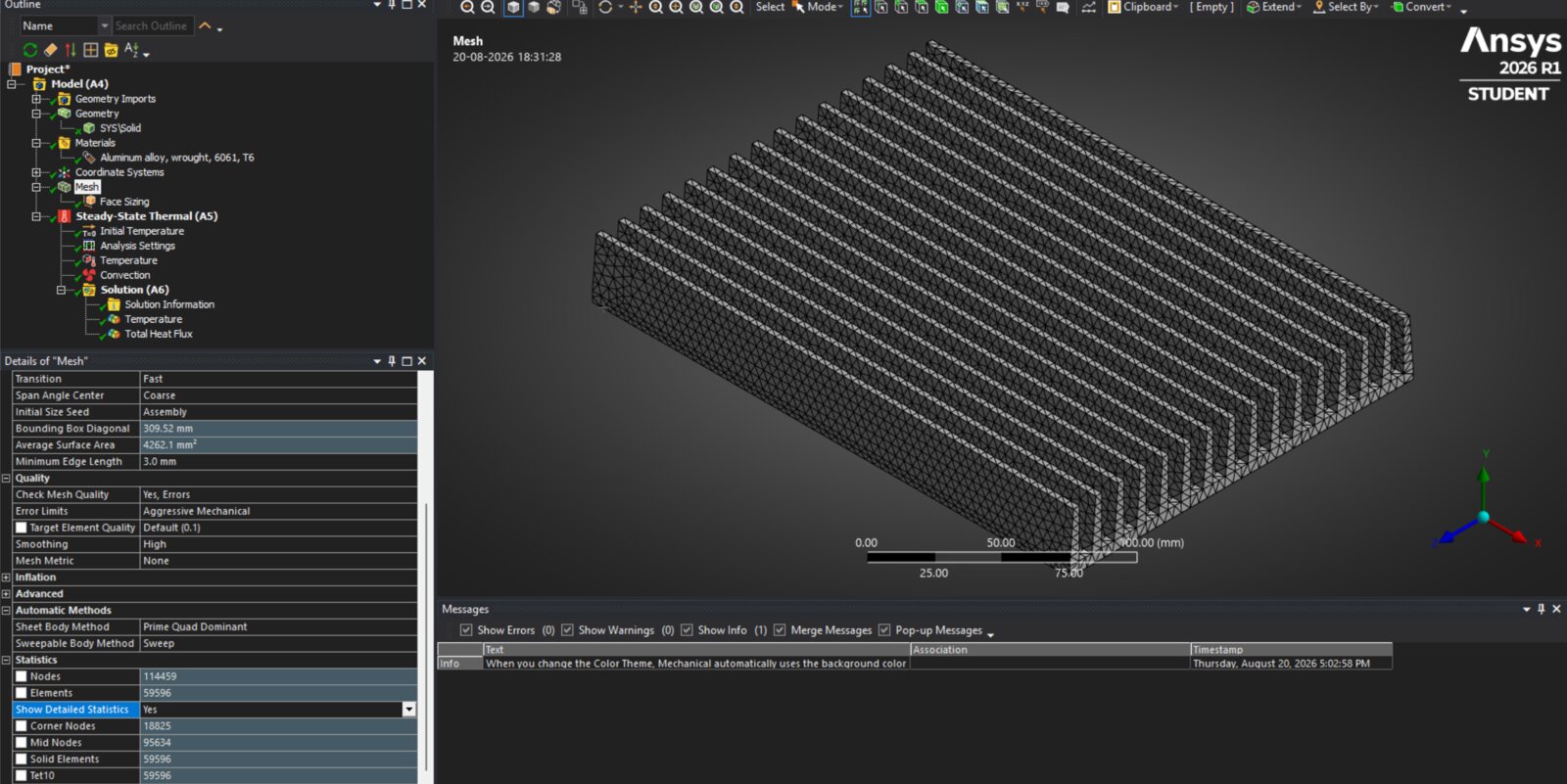
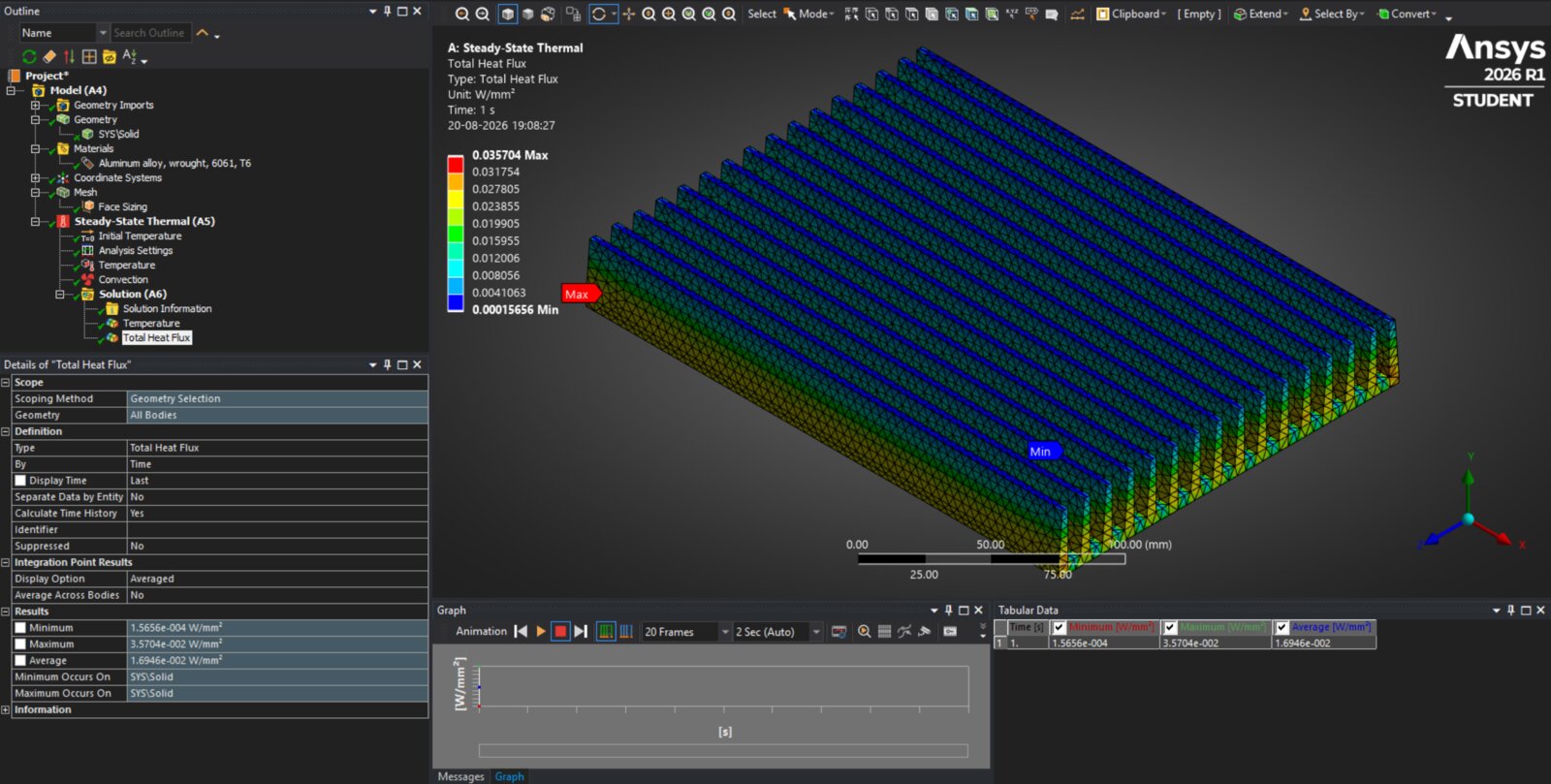
ANSYS Mechanical, run independently with a 114,459-node tetrahedral mesh, predicted a total heat-flux range of 78.07–41,283 W/m² for the same geometry. The two platforms didn't produce identical numbers, expected given differences in mesh discretization, geometry treatment, and flux evaluation, but both reproduced the same physical trend: maximum temperature at the heated base, decreasing steadily toward the fin tips.
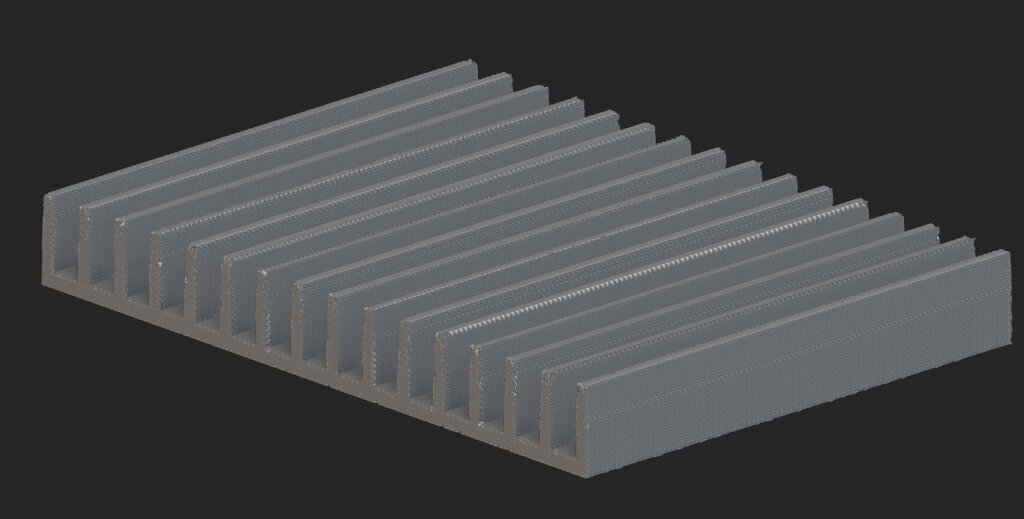
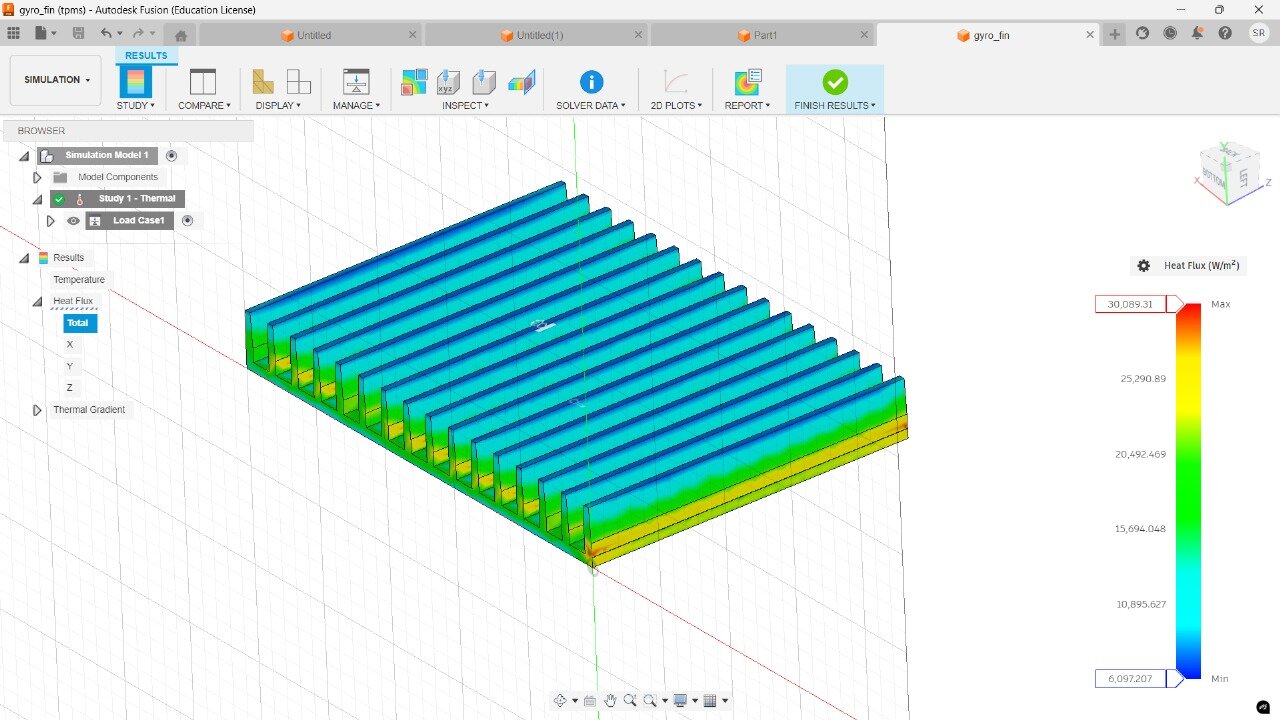
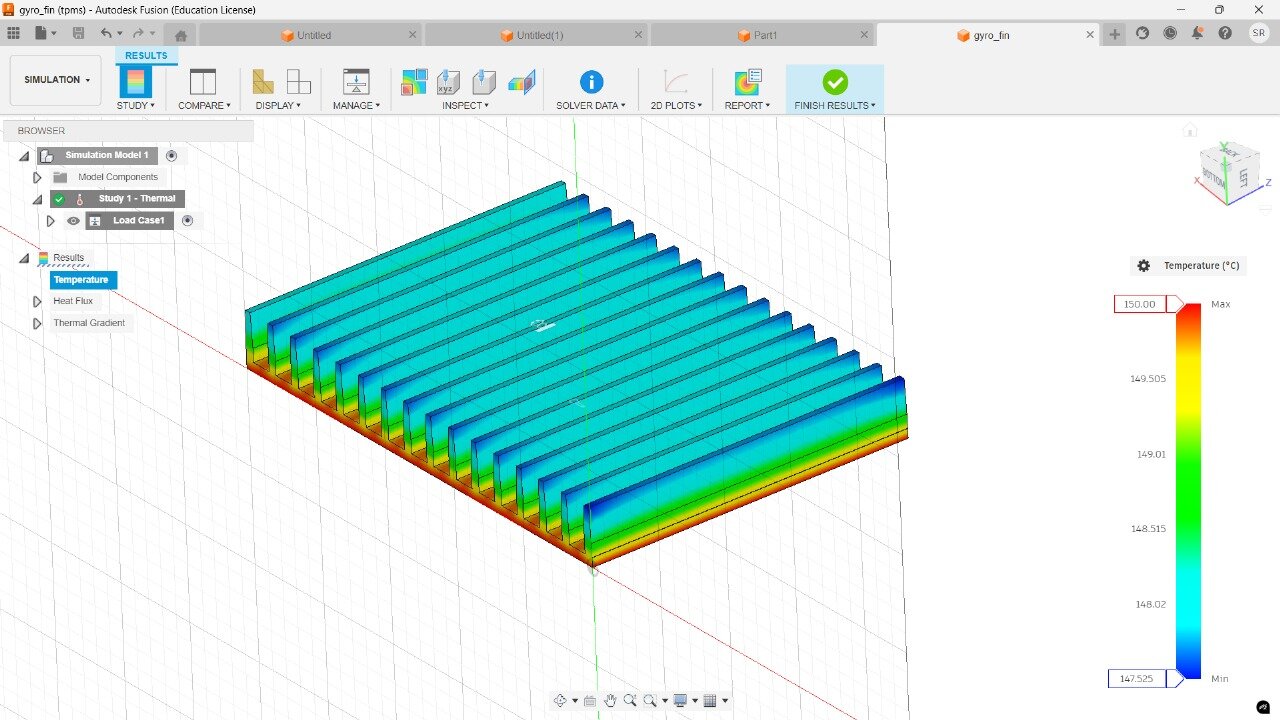
The gyroid-infused fin reached a higher peak heat flux than the solid design, 30,089 W/m² at the fin roots and base junction, dropping to about 6,097 W/m² at the tips. Fusion 360 trials overall showed the gyroid design delivering an 8% average heat flux improvement over the solid fin, without any tip overheating, meaning the improvement came from genuinely more effective heat rejection rather than from concentrating heat somewhere unsafe. The gyroid's base plate held a similarly tight temperature range, 150°C down to 147.5°C, so the thermal stability of the solid design wasn't sacrificed to get that extra flux.
The physical explanation is straightforward: the gyroid's much higher surface-area-to-volume ratio gives surrounding air more contact area to pull heat from per unit of aluminium used, while its open internal framework also encourages better airflow through the structure itself. That combination is what improves cooling while simultaneously cutting the material weight needed to build the fin.
Before trusting any comparison between the two designs, we ran a mesh convergence study on the solid fin baseline in ANSYS: a coarse mesh (46,946 nodes, 23,204 Tet10 elements) against the medium baseline mesh (114,459 nodes, 59,596 Tet10 elements). Both meshes converged to the same average temperature, confirming mesh density wasn't distorting the comparison.
We also ran a parametric sensitivity study on the convective heat-transfer coefficient, testing three values around the 22 W/m²K baseline. Heat flux turned out to be considerably more sensitive to this coefficient than temperature was: raising the coefficient produced a clear, proportional jump in maximum and average heat flux, while average temperature shifted by well under 1% across the same range, because the maximum temperature stays pinned at the prescribed base condition regardless.
A gyroid lattice core in a trapezoidal fin is a genuine, measurable improvement over a solid core under natural convection: about 8% more average heat flux, no tip overheating, and a real reduction in the material needed to build the fin. That combination of lighter and more thermally effective is exactly the tradeoff aerospace, automotive electronics, and compact power systems care about. The obvious next step is testing additional gyroid cell configurations to see how far this can be pushed before the added surface area stops paying off relative to the manufacturing complexity of printing a lattice core.