CeO₂ nanoparticles added to safflower biodiesel/diesel blends at different compression ratios
Biodiesel burns cleaner than diesel in some ways and worse in others: it typically drops thermal efficiency and raises fuel consumption because of its lower energy content and higher viscosity. This study asked whether cerium oxide (CeO₂) nanoparticles, an oxygen-donor catalyst, could claw back that lost efficiency in a safflower biodiesel blend (B20, 20% biodiesel), and whether tuning the engine's compression ratio alongside the nanoparticle dose could close the gap with diesel entirely.
Safflower oil was chosen as a nonedible, second-generation feedstock with a favourable FAME profile. The finished biodiesel was tested against pure diesel and against B20 with 60 mg/L of CeO₂ nanoparticles, across four compression ratios (CR16–CR19) and four engine loads (25–100%), then modelled with response surface methodology to find the single best-performing combination.
Safflower oil was converted to biodiesel through a two-step acid-catalyzed then base-catalyzed transesterification, needed because its free fatty acid content exceeded the threshold for a single base-catalyzed reaction. A 6:1 methanol-to-oil ratio, sulfuric acid for the acid step, and KOH for the base step yielded 94% pure biodiesel after settling and filtration.
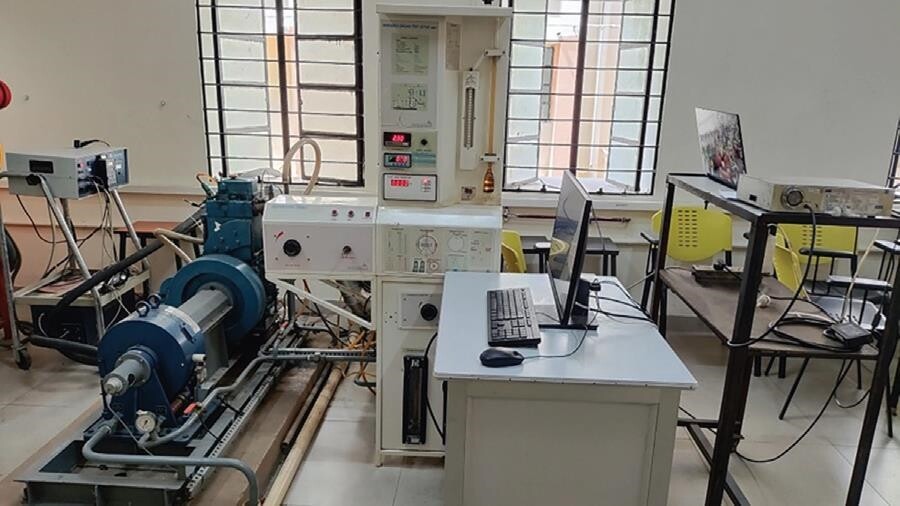
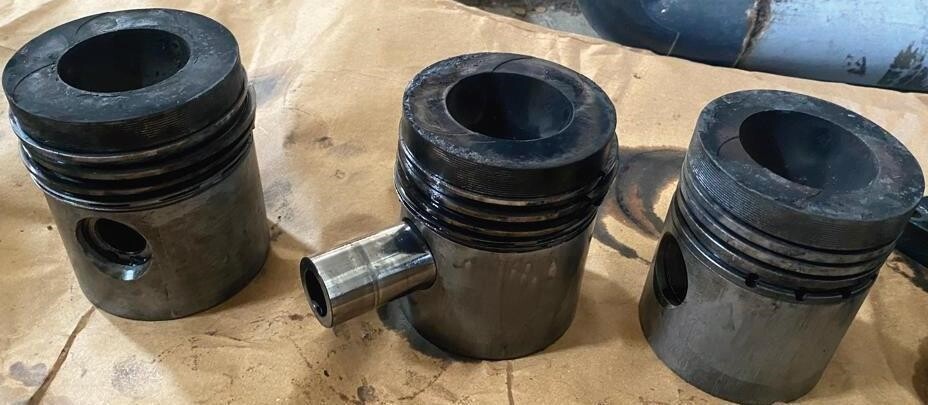
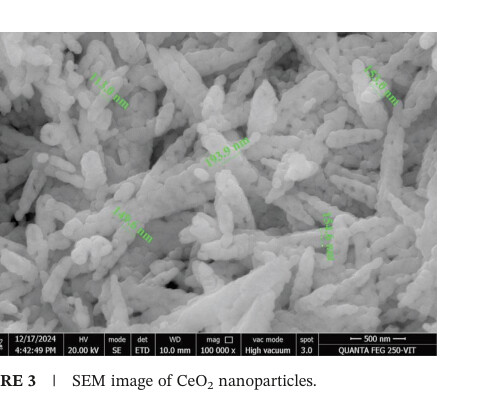
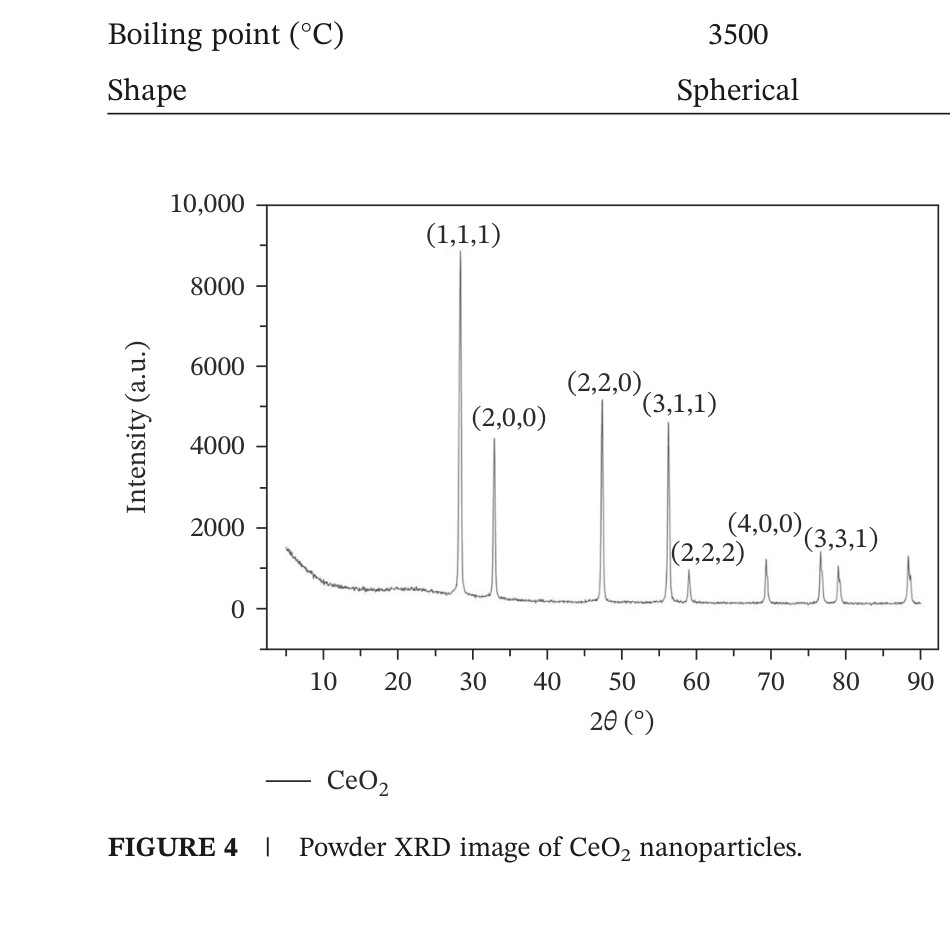
CeO₂ nanoparticles (Vedayukt India, spherical, 113–194 nm cluster size, 25.8 m²/g specific surface area) were dispersed into B20 at 60 mg/L using a magnetic stirrer. All testing ran on a single-cylinder, four-stroke, direct-injection CI engine (Kirloskar, 5.2 kW rated, 1500 rpm) fitted with a modified hemispherical piston-top bowl to shorten ignition delay, with shims used to step through compression ratios from 16:1 to 19:1.
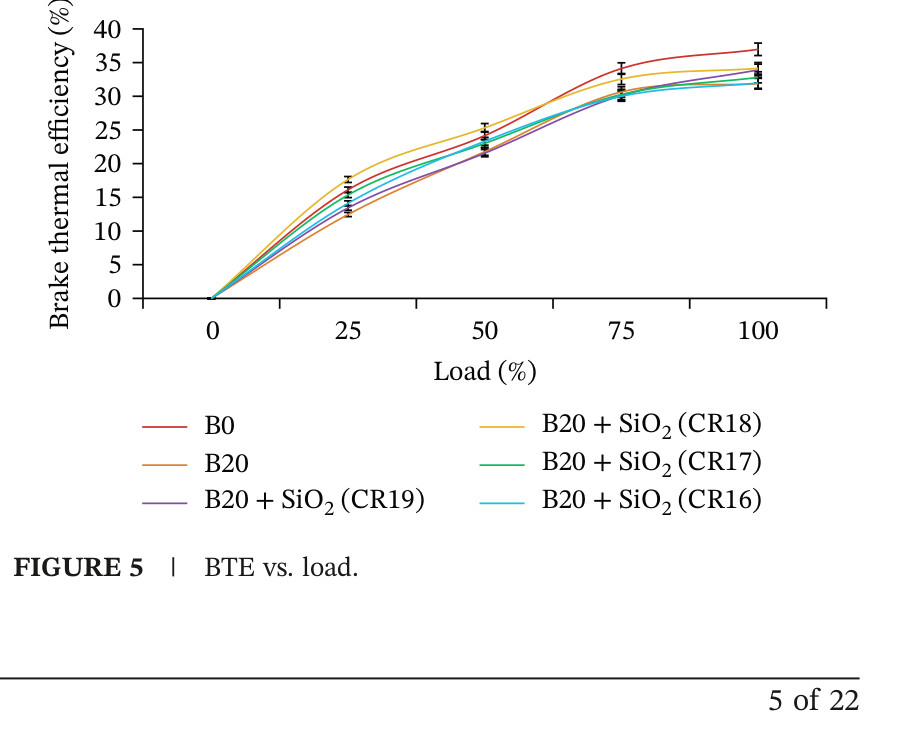
At full load, pure diesel reached 36.97% brake thermal efficiency (BTE) against B20's 31.87%, a 13.79% shortfall consistent with biodiesel's lower energy density and higher viscosity. Adding CeO₂ recovered a meaningful share of that gap: BTE rose by 6.04–6.67% across CR19–CR18 at full load, with CR18 delivering the strongest result at every load point tested, even edging past pure diesel's BTE at 50% and 75% load.
Brake specific fuel consumption (BSFC) followed the inverse pattern: CeO₂ cut BSFC by up to 17.64% relative to plain B20 at CR18, attributed to better combustion completeness from the nanoparticles' oxygen-donor catalytic action and their high surface-area-to-volume ratio improving heat transfer to fuel droplets.
On emissions, CeO₂ addition cut CO by up to 46% and HC by up to 27% relative to diesel at full load, largely because CeO₂ shifts between its +4 and +3 oxidation states, supplying oxygen that helps burn out unburned hydrocarbons and carbon monoxide during combustion. Smoke opacity improved similarly, with CR18 achieving the lowest full-load opacity across every fuel tested. The one tradeoff: NOx rose by 7.54–10.05% with CeO₂ addition, a common cost of biodiesel's higher oxygen content driving up peak combustion temperatures.
A quadratic RSM model was built in Design-Expert 13 across all nine response variables (BTE, BSFC, EGT, CO, HC, NOx, smoke, heat release rate, and cylinder pressure), each fitted with R² values between 0.997 and 0.9998 and F-values confirming strong statistical significance. A desirability-based multi-objective optimization, weighting all responses equally, converged on 60% engine load and CR16 as the best overall compromise between efficiency, combustion quality, and emissions, with an aggregate desirability score of 0.993.
Confirmation testing at that optimum point matched the RSM predictions closely: relative errors stayed under 3% for every performance and combustion metric (BTE 2.78%, BSFC 0.98%, EGT 0.22%) and under 2.2% for every emissions metric (CO 1.67%, HC 2.17%, NOx 0.18%, smoke 1.24%), validating the model's predictive reliability across the full operating range.